An exciting tour which mixes eras and brings alive the timeless spirit of our capital : from the bewigged dandies of the 18th century to the spiky Punks of the 1970s. Next tour Sunday, 9th November.
The tour goes from College Green and Trinity College up Grafton Street to St Stephen’s Green, taking in the statue and buildings connected to famous characters.
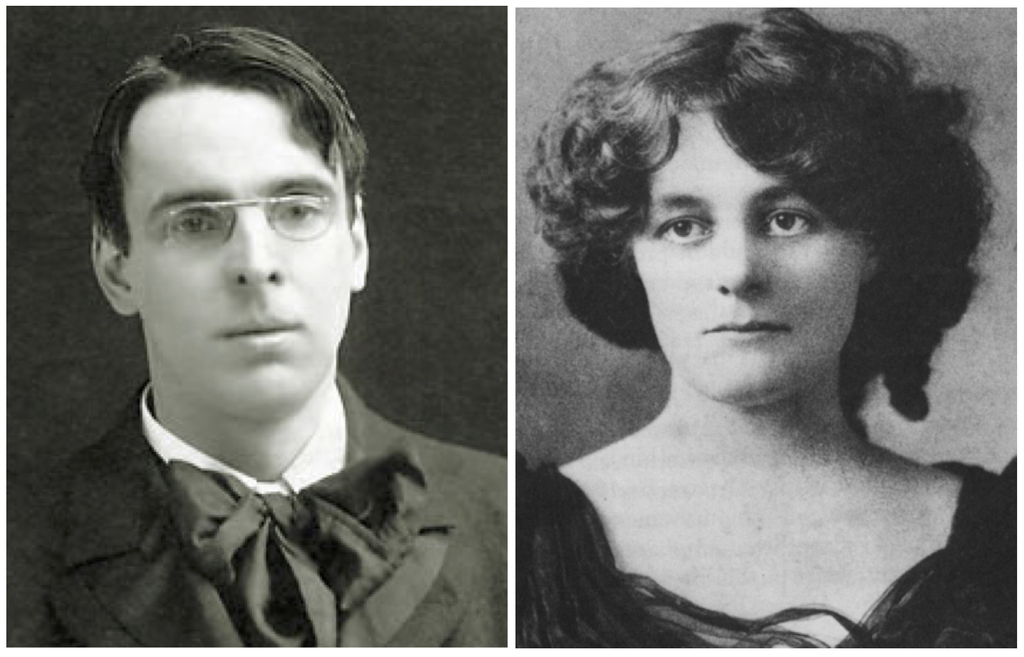
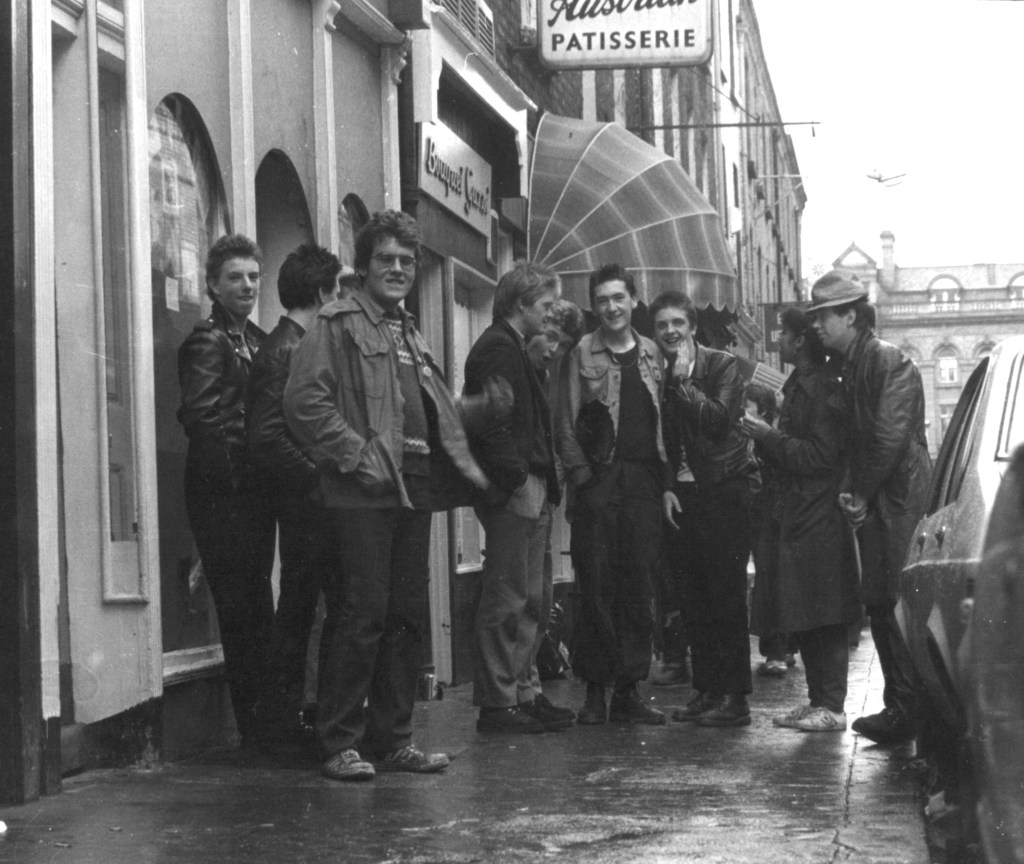
We hear about Maud Gonne (pictured above) the beauty and rebel who inspired the love poetry of William Butler Yeats – and still turned him down. We look in on the literary pubs of the 1950s and 60s, frequented by Brendan Behan and Patrick Kavanagh. And we hear about the former McGonagles nite club where Hippies, Mods and Punks mingled over the decades.
Our tour guide Eamon Delaney, a teenage punk himself, gives us a few tales about the rock shows back then and an emerging band called U2.
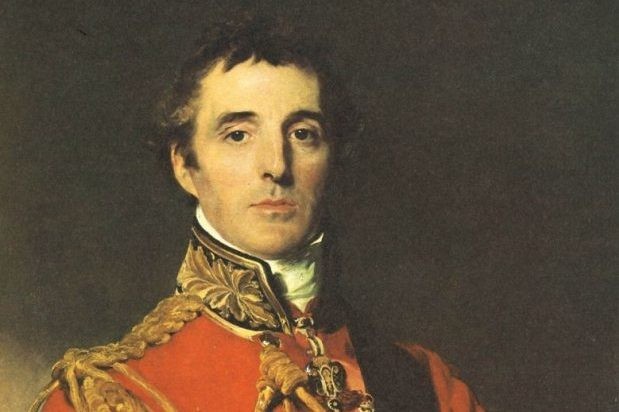
Before that on Grafton Steet, in 1758, there was Whytes Academy, a ‘Seminary for the Instruction of Youth’. The pupils included dramatist Richard Brinsley Sheridan (‘The School for Scandal’) patriot Robert Emmet and a young Duke of Wellington (below). Yes, he was Irish – up to a point.
The school’s founder, Samuel Whyte, once advised an aspiring writer Henrietta Battier that ‘if thou must write and would’st thy works dispense – write novels, sermons, Anything but verse’. The poet Patrick Kavanagh would disagree!
Women were still denied formal education and Whyte feared that Henrietta’s poetry would not be taken seriously.
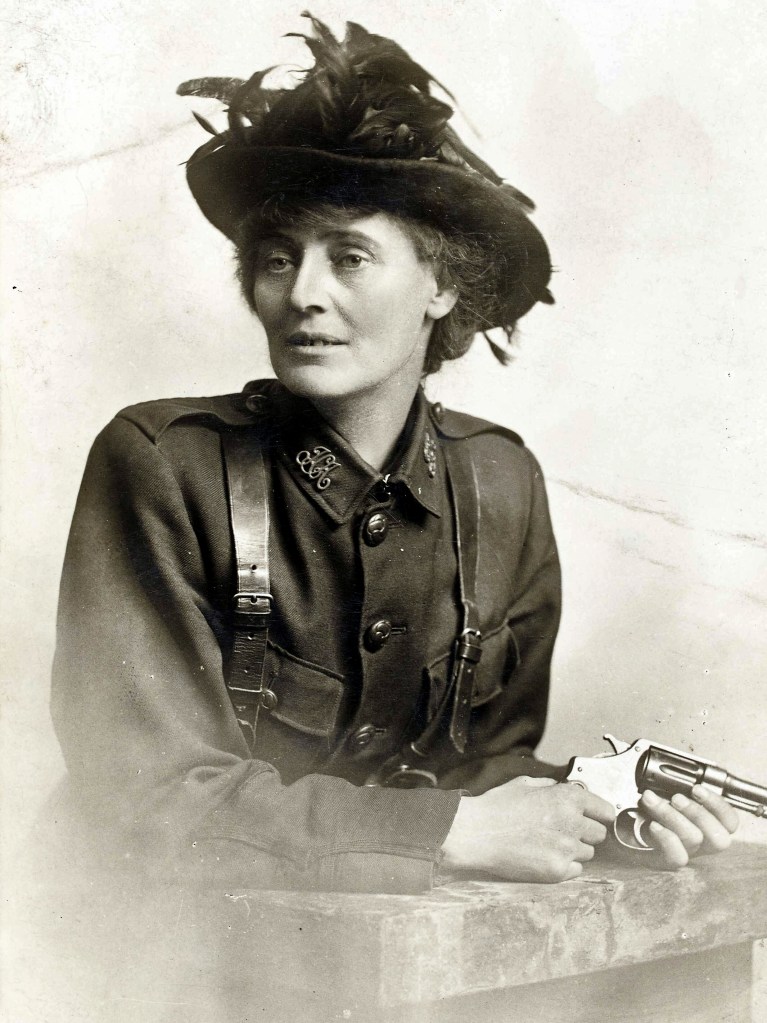
No such gender restraints, however, for Constance Markiewicz, (pictured above). In 1916, she took over a building above Grafton Street as part of the Easter Rising. The building overlooked St Stephen’s Green, and bullet holes from the firing between Irish rebels and British troops are still visible on the nearby Fusiliers Arch.
Across from this arch was the Dandelion Market, famous for its colourful stalls and a big attraction for hippies, folkies and punk rockers. Our guide Eamon will give us more tales of his punk days (pictured below!)
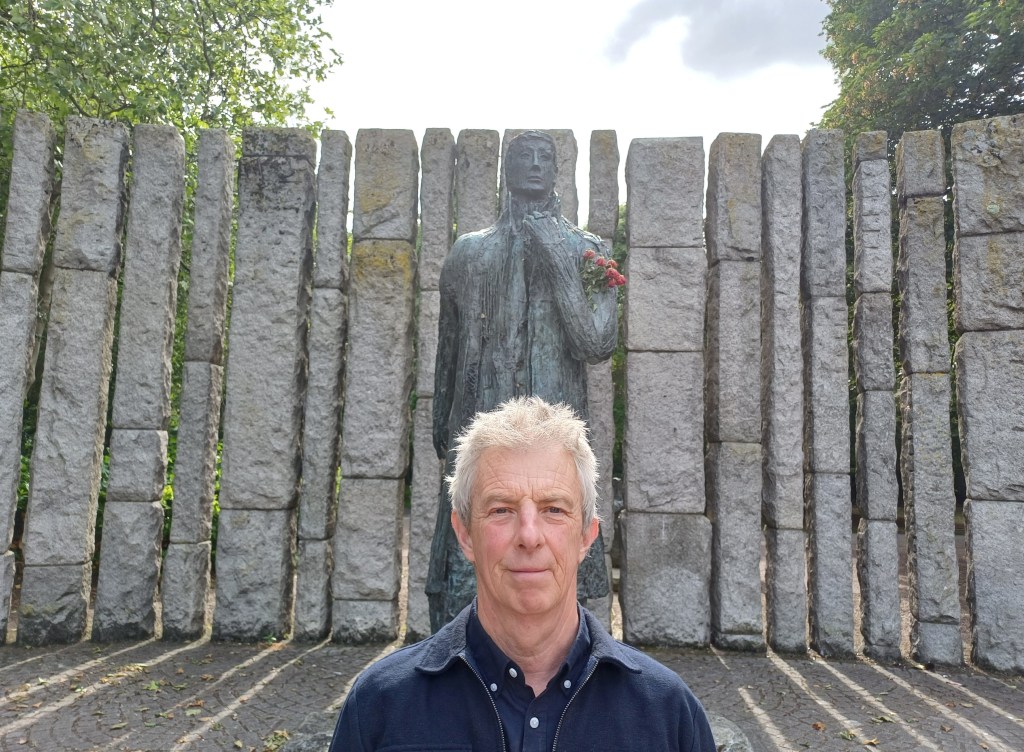
There is a further personal angle in that the tour begins at the Thomas Davis statue on College Green, sculpted by Eamon’s father, Edward Delaney RHA. And it ends at the Wolfe Tone statue on St Stephen’s Green, also sculpted by his father.
We hear the stories behind these statues and the personalities of.the heroes depicted – Thomas Davis was the leader of the Young Irelanders revolt of 1848 and his statue replaced that of King William of Orange who was blown off his bronze horse.
Wolfe Tone meanwhile was a leader in the 1798 United Irishmen rebellion. He helped the Revolutionary French to invade and was sentenced to hang by the British. But he cheated the hangman by cutting his own throat – he wanted to be shot as a soldier. His statue was blown up in 1971 but it was subsequently repaired.
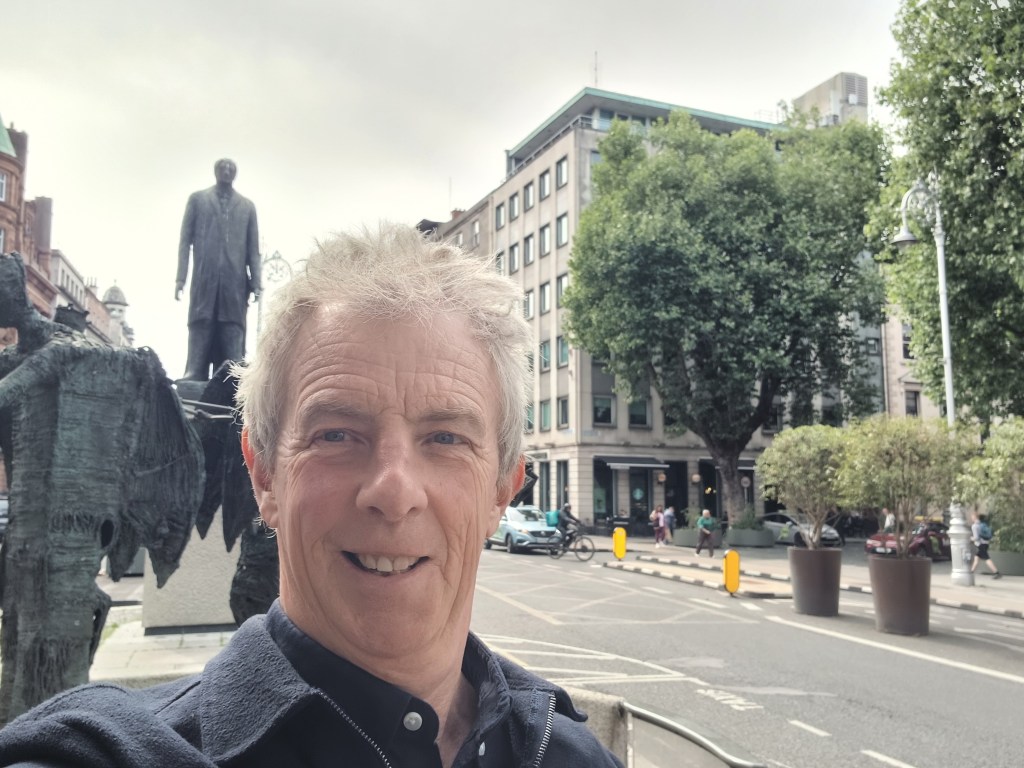
His son Eamon (above) remembers these statues being constructed in the yard of his childhood home, and now shares these memories, as well as his knowledge of the city’s history and characters.
Book now for a fascinating two hours ramble on these Dublin streets.
Next tour will be on Sunday, 24 August, meeting at 11.00 am, inside the front gates of Trinity College.
Book via PayPal or contact eamondelaney2@gmail.com or call 087 9465974.
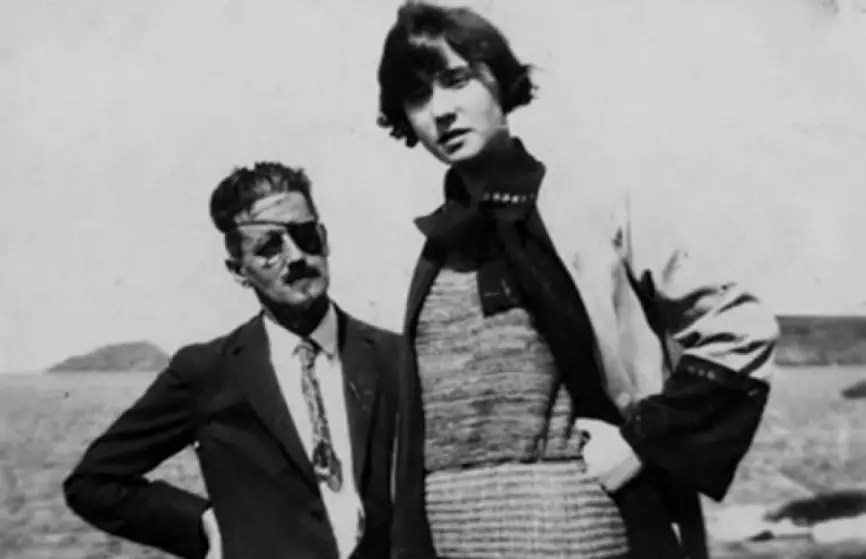
Nora Barnacle (left), James Joyce (center) and their solicitor in London after their marriage, July 4th, 1931.
Meet outside National Gallery entrance, Clare Street at 11 am. Duration 90 minutes, price 17 euro. On again Saturday, 15 February
In just a small part of Dublin city, are deep connections to the lives and works of three major international writers, as well as other poets, painters and rebels.
Writer Eamon Delaney takes us on a walking tour of Westland Row, and north Merrion Square and talks about these fascinating links. We learn about life from 1890 to 1930, the path to Irish independence and the origins of great works of art.
There will be readings throughout. We begin on Clare Street where the young Samuel Beckett (below) lived and wrote his first novel.
We move to the former Finns Hotel, where James Joyce first encountered the love of his life Nora Barnacle on 16 June 1904, a date he later immortalised in his novel Ulysses. We proceed to Westland Row to visit locations from Ulysses such as Swenys Chemist where the novel’s main character Leopold Bloom buys soap, and St Andrew’s Church, which he visits.
We retrace Bloom’s steps via Brunswick Street, now Pearse street and renamed for Padraic Pearse, the 1916 Rebel and poet who lived nearby, with his family. Padraic and his brother Willie were executed after the Easter Rising. We see the houses where Oscar Wilde (below) lived and hear about his life and work.
On the way, we pass Oriel House, the notorious interrogation centre during the Irish Civil War. This was the conflict which followed the Easter Rising, and the War of Independence.
Across the road, we see the reminder of another bitter conflict : the Moyne Institute in Trinity, named after the Anglo Irish diplomat assasinated in Cairo by hardline Zionists to prevent a settlement in Palestine.
We go along Merrion Square, and pass the home of Mary Swanzy, famous in artistic Paris for her modernist paintings (example below). Paris is a common theme on this tour and was very influential in the work of Beckett, Joyce, Wilde and Swanzy.
Finally, we proceed to Holles Street Maternity Hospital, and the setting for possibly the most difficult scene in Ulysses – the Oxen of the Sun chapter. But it is also one of the most entertaining, being composed of a mish mash of different English styles – romantic, Middle English and American slang – which Eamon will read from.
We then return to Westland Row via Denzille Lane, retracing ths steps of the characters from this scene. En route we encounter more locations, before adjourning for lunch and further discussion!
Pictured above : the painter, Mary Swanzy.
This next tour is on Saturday, 15 February at 11.00 am. Private tours can also be arranged, via email below.
Assembly point is outside the National Gallery entrance on Clare Street (not the Merrion Square entrance).
Contact eamondelaney2@gmail.com to book a place, or call 087 9465974 .
North Dublin is at the heart of the great writer, James Joyce.
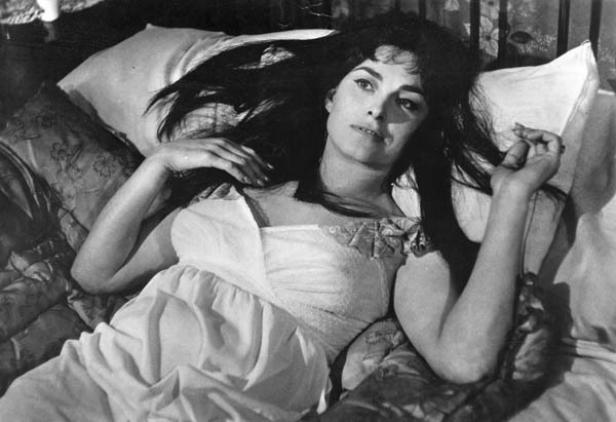
In this small but intensely historical area, are locations in his life and writings, especially the famous novel, Ulysses. (Above : Molly Bloom in the 1967 movie version of the novel).
Author and historian Eamon Delaney brings us on a tour, showing us where the Duke of Wellington got married and where Eamon De Valera lived – real life people who are also characters in Joyce’s works. There are readings throughout.
The tour begins in Phibsborough where Joyce lived with his family, and proceeds down Eccles Street where Leopold and Molly Bloom lived in Ulysses.
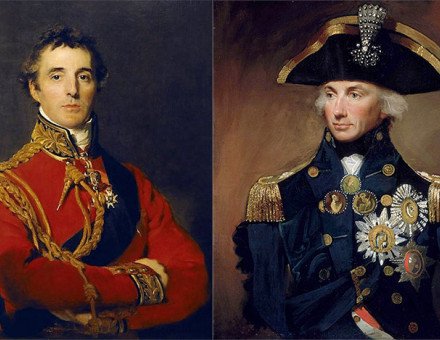
On the way, we pass Nelson Street, the setting for Brendan Behan’s play The Hostage and named after the famous British Admiral, about whom Joyce had many jokes.
Above : Lord Wellington and Admiral Nelson.
We go along Dorset Street, where Leopold shops for breakfast, and see Temple Street Church, which features in Ulysses and in the short story The Boarding House.
We go up the North Circular Road, much discussed in Ulysses, and then left at Innishfallen Parade, where Joyce lived with his family, and where his young brother George died.
We go towards the Royal Canal, and face Claude Road, where Joyce’s father lived, and on to Cross Guns Bridge, across which Paddy Dignam’s famous funeral scene passes in Ulysses. We conclude with a powerful reading of this scene – reflecting on life and death.
Above : James Joyce and his daughter, Lucia.
The next tour is on Wednesday, 14 January starting at 11.00 at Phibsborough Library. Duration is about 2 hours and price is 18 euro.
Contact eamondelaney2@gmail.com to book a place, or call 087 9465974. Payment in cash on the day, or via PayPal here :
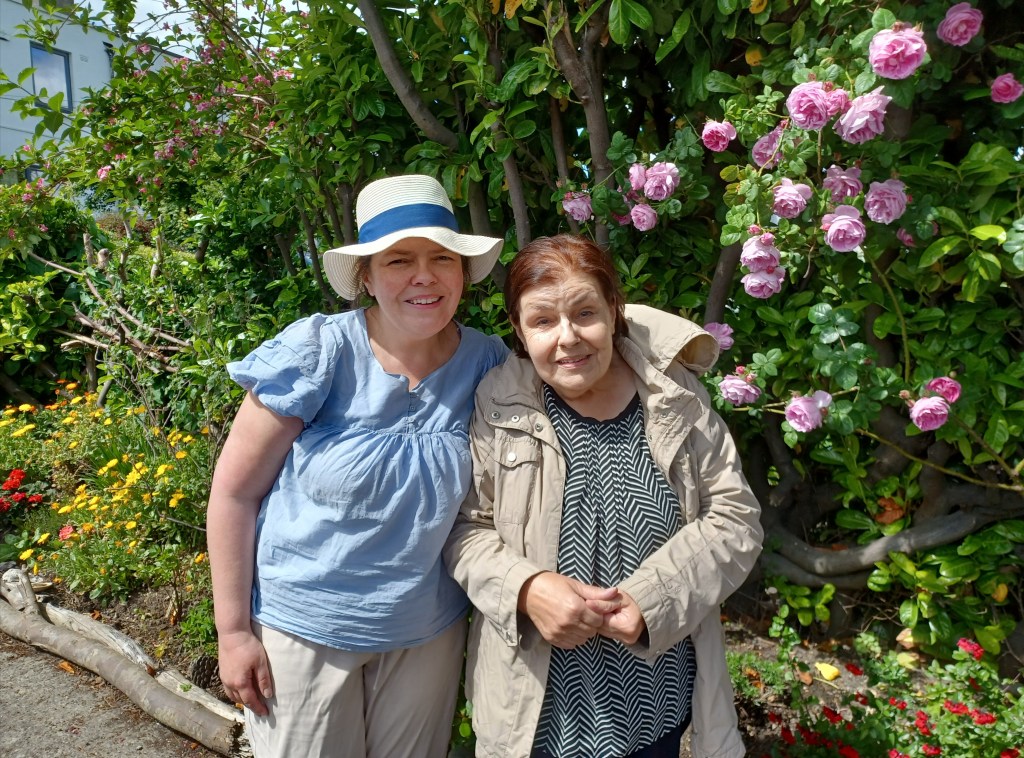
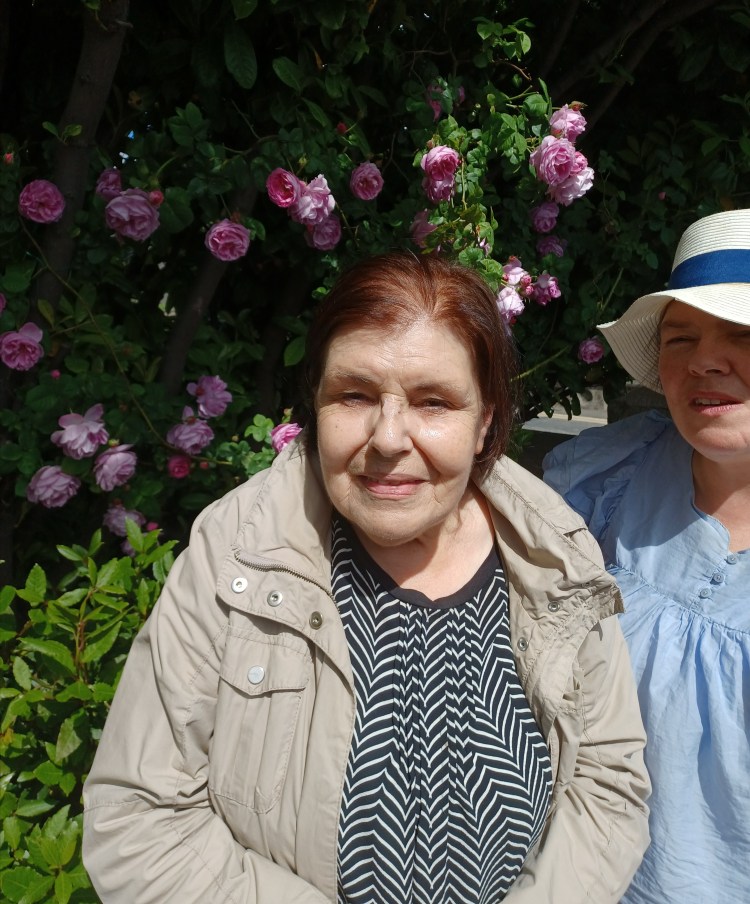
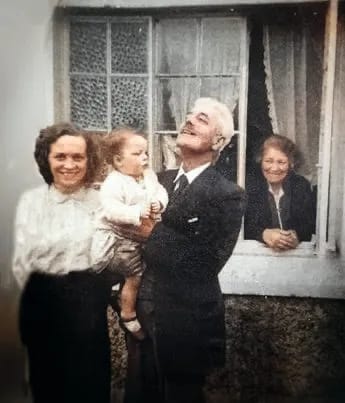
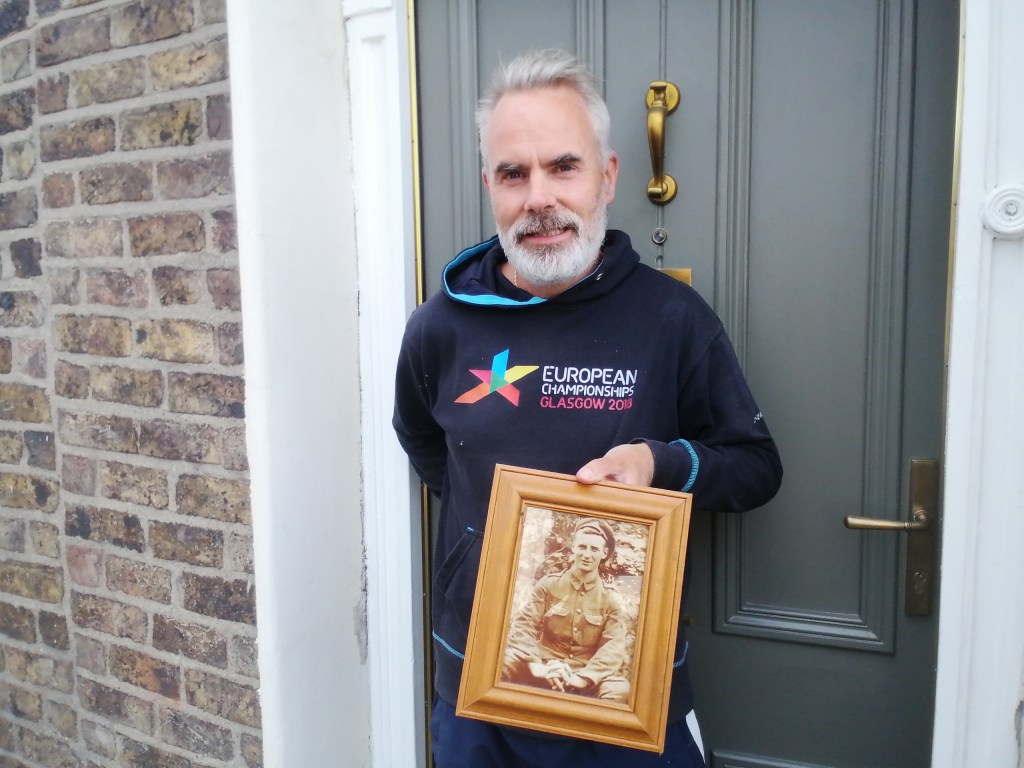
Above: Maria Smith, Granddaughter of Salvator Gavillet, with her own daughter Ann Gordon
Name of soldier : Salvator Gavillet
Name of descendent : Maria Smith
Like many, Salvator Gavillet enlisted for the Great War in the belief that he was boosting the case for Irish independence and Home Rule.
However, when he came home, the atmosphere had changed and a much more separatist movement led by Irish Republicans was dominant. He felt neglected and his efforts forgotten in the emerging new Irish State.
By contrast, the British exchequer provided Gavillet with a pension and a house in Killester, the north Dublin suburb specifically created for veterans of World War One. His grand daughter Maria Smith (pictured below, with her daughter, Ann) also lived there.
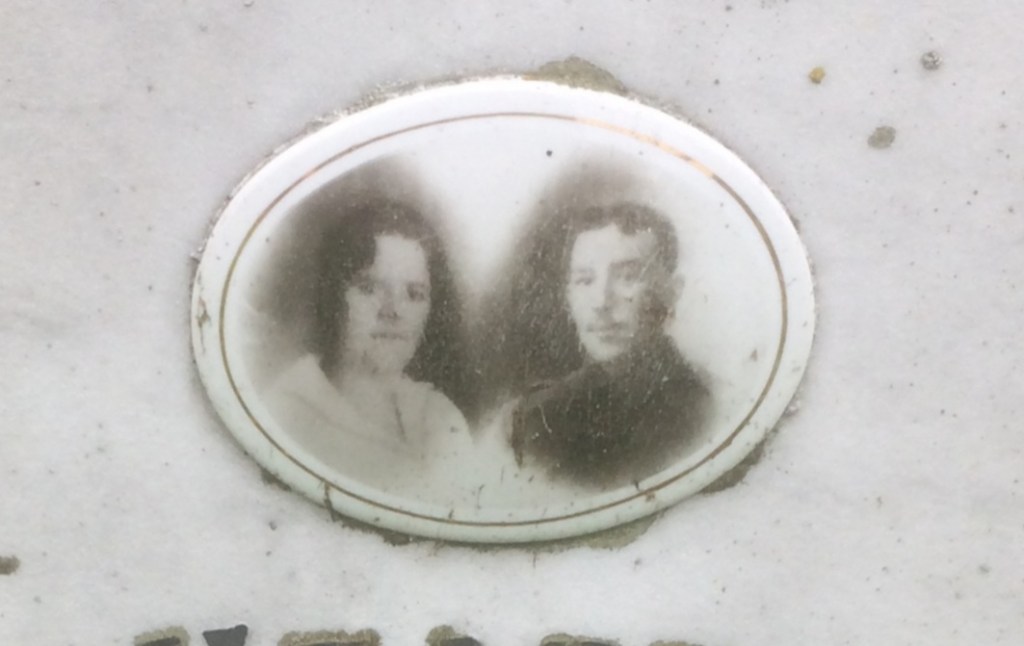
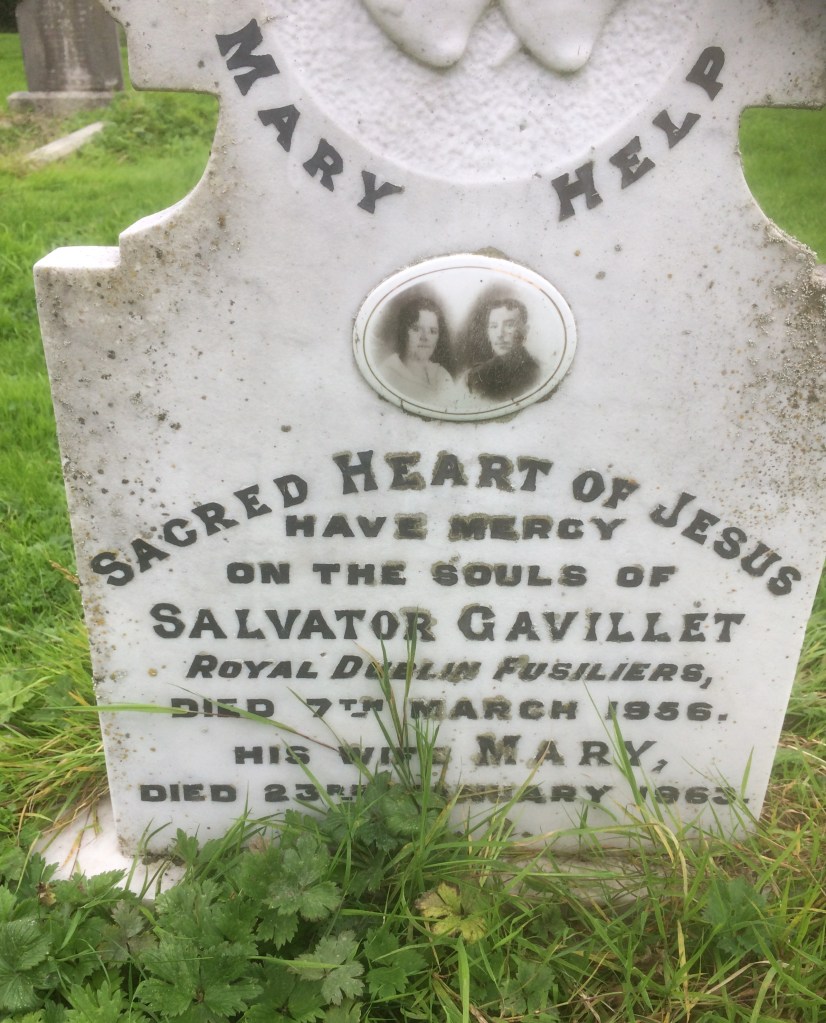
Detail from tombstone
Gavillet, who had a Swiss father, originally lived in Glasnevin, off Washerwoman’s Hill and right next to the old Ballymun Church of Ireland graveyard, in which coincidentally, there are a number of WW1 graves.
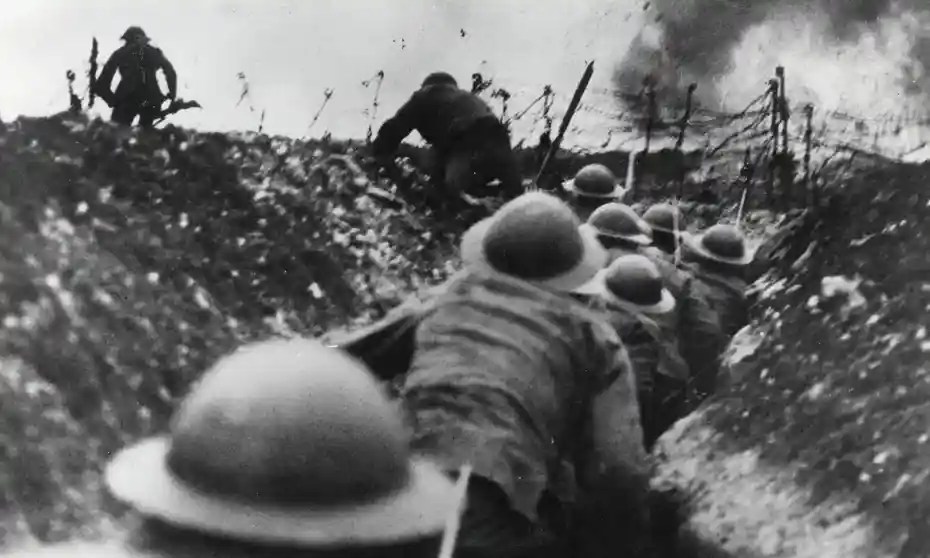
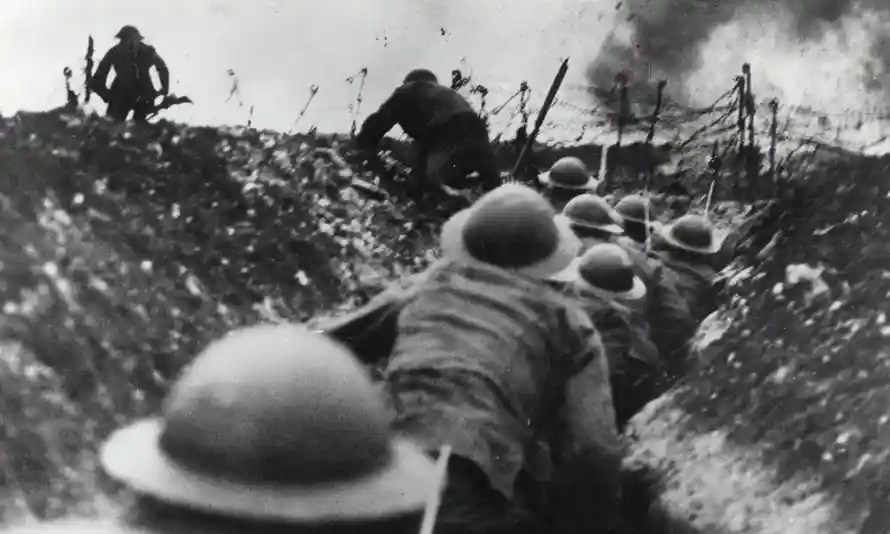
Gavillet fought at the Somme where he got shot and injured while carrying a wounded comrade. He also lost the sight of an eye, and many of his friends went missing in that long and traumatic Somme engagement. Gavillet lived until 1956.
Your own name : Maria Smith
Your relative : Grandfather, Salvator Gavillet
Period of activity: World War One
Specific regiment: Royal Dublin Fusiliers
Areas served in : Western Front, the Somme (pictured below)
Did you have much contact with your grandfather ?
Yes, we saw a good deal of him when we were kids.
What are the most striking memories of him?
My grandad rarely spoke about the war. And he felt disappointed about how it was barely acknowledged by official Ireland and the new Irish State, given the sacrifices made by so many men and their families. .
It was particularly disappointing given that he had enlisted seeking to boost the case of Irish self-rule, and at the urging of the Home Rule leader John Redmond. My grandfather was mindful of Ireland’s parallels with other small countries like Belguim, and Switzerland, where his father came from
Where is he buried?
In Grangegorman military cemetery in north Dublin. Picture of grave below.
Gavillet was born in 1888 to a very large family- there were 14 children in all. His brother Gilbert was also a soldier. His father Charles Francis Gavillet was originally from Dardagny near Geneva in Switzerland and married Susan Doherty in Dublin.
Efforts are currently underway meanwhile to have a memorial garden erected in Killester, in north Dublin. This is in memory of the WW1 veterans, like Gavillet, who lived there with their families.
The memorial garden will honour families such as this one, pictured below, at The Demesne in Killester in 1958.
Below is a map for the Killester Garden suburb, as planned by the Soldiers and Sailors Trust. The emphasis was on the ‘healing powers’ of horticulture, gardens and fresh air, after the ordeal of the wartime trenches.
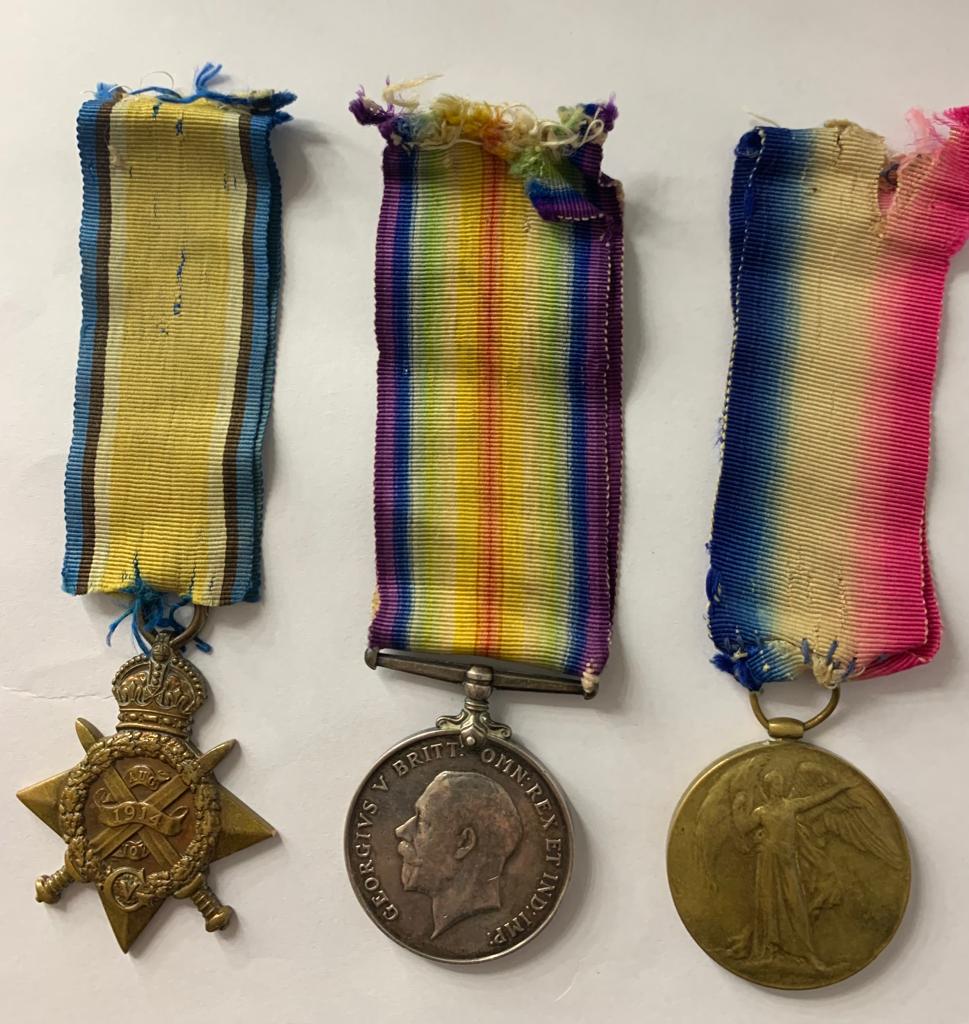
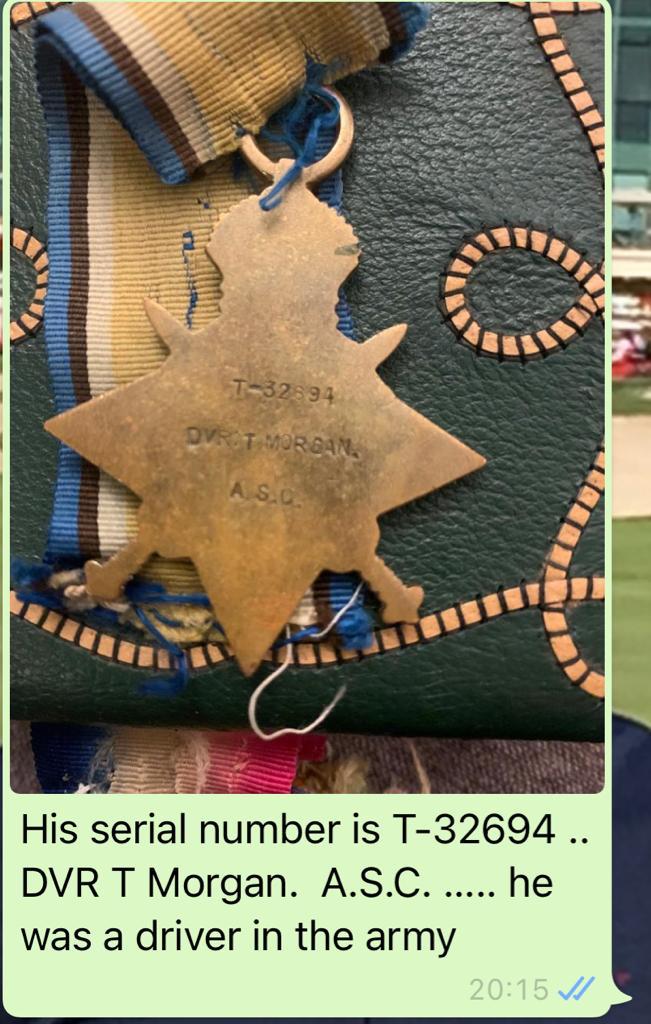
Pictured above : Mary Morgan wearing the World War One medals of her son, Thomas.
Elsewhere in this section, Breda Gaynor describes tracking down the grave of her relative, Thomas Masterson, an Irish born US soldier buried in Belgium.
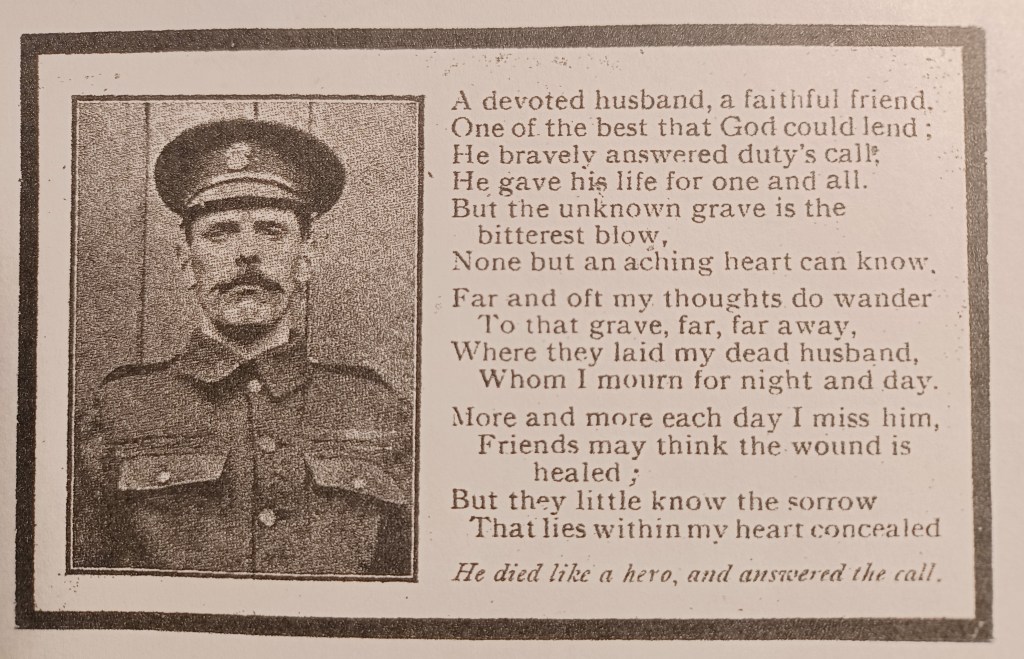
Such is the close connection of north Dublin and the Great War, that Breda also had a neighbour with an uncle directly involved. His name was Thomas Morgan and he was the uncle of Breda’s next door neighbour, Doreen Morgan, who died some years ago.
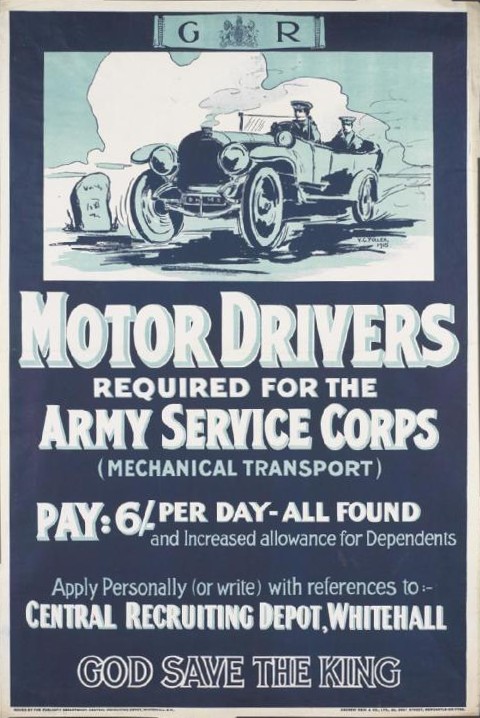
Thomas Morgan served with the Horse Unit, of the Army Services Corps (ASC) and survived the war. He landed in France on 22nd August 1914, with the 4th Division – at the very start of the war.
Morgan’s war medals have been passed down through his brother’s family, suggesting Thomas didn’t marry or have children of his own. Before enlisting, he lived with his family in Grenville Street, Dublin, near Mountjoy Square and worked as a Messenger.
The 1911 Census describes his father, Tommy, as an engine driver and his sister as a sales woman in the boot department of a large store. They sound like the metropolitan, commercially-active characters of James Joyce’s Ulysses, set in 1904.
Interestingly, there was another Thomas Morgan, from nearby Gloucester Street and listed as having died in the war, according to the A Street Near You website.
Gloucester Street, and the so called ‘Gloucester Diamond’ , was at the heart of Dublin’s inner city and was the source of many soldiers, including Royal Dublin Fusiliers.
Thomas Morgan would have been in good company, with a great many soldiers also coming from Mountjoy Square and its surrounding streets.
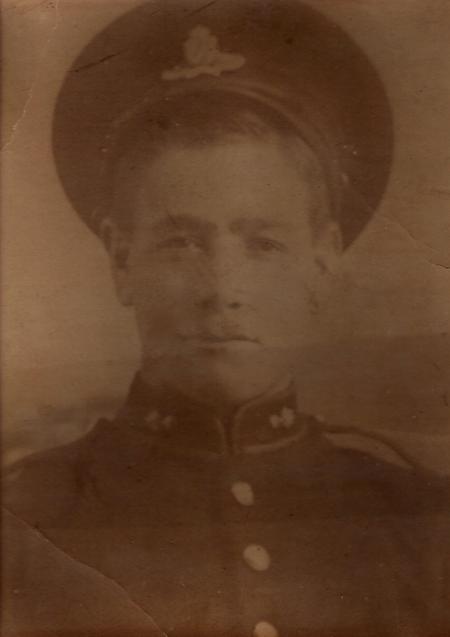
Below is a picture of John Wilson of 40 Mountjoy Square. He was a driver, with the Royal Field Artillery, which worked in tandem with the ASC. Wilson died on 20 September 1918 and is buried in Brie British cemetery in France.
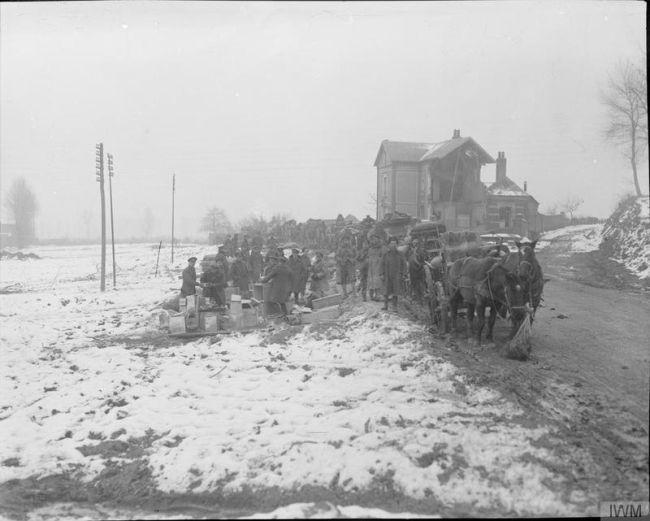
The Army Services Corps (ASC), in which Thomas Morgan served, were the backbone of the whole war effort and, in many respects, they were the unsung heroes of the conflict.
Quite simply, without them there would have been no campaign. Soldiers cannot fight without food, equipment and ammunition, and cannot move without horses or vehicles. And it was the ASC’s job to provide all of this.
In supplying horses and motor vehicles, railways and waterways, the ASC performed ambitious feats of logistics and was a crucial factor in how the war was won.
Medals of Thomas Morgan : the ribbons should be reversed
Given the scale of the Great War, it was a colossal endeavour and the ASC would eventually number an extraordinary 10,547 officers and 315,334 men.
The largest element of the ASC was the Horse Transport section. The Mechanical Transport section, in which Morgan served, was also considerable.
In 1914, the British Army was already the most mechanised in the world and it retained this strength. By 1918, such strategic importance allowed it to maintain supplies as soldiers advanced over hard fought ground.
The ASC managed these so called Lines of Communication (logistics) and supplied heavy artillery through the Ammunition Columns, as well as managing Omnibus Companies, Motor Ambulance Convoys, and Bridging and Pontoon units.
The ASC Remounts Service was responsible for the provisioning of horses and mules. Ireland supplied many horses. There is even a Remount farm, in north Dublin, near Lusk, which trained a raised horses for the front. After Independence, however, it was burnt down leaving the locals without a major source of employment and equine industry.
The ASC also had Labour Companies. In France and Flanders it was realised in 1914 that the local authorities couldn’t supply civilian men for labouring duties, like unloading stores and equipment from ships. It was arranged to send 300 labourers, and soon specific Labour Companies were formed. Almost 21,000 skilled labourers and dock workers had joined by the end of 1915.
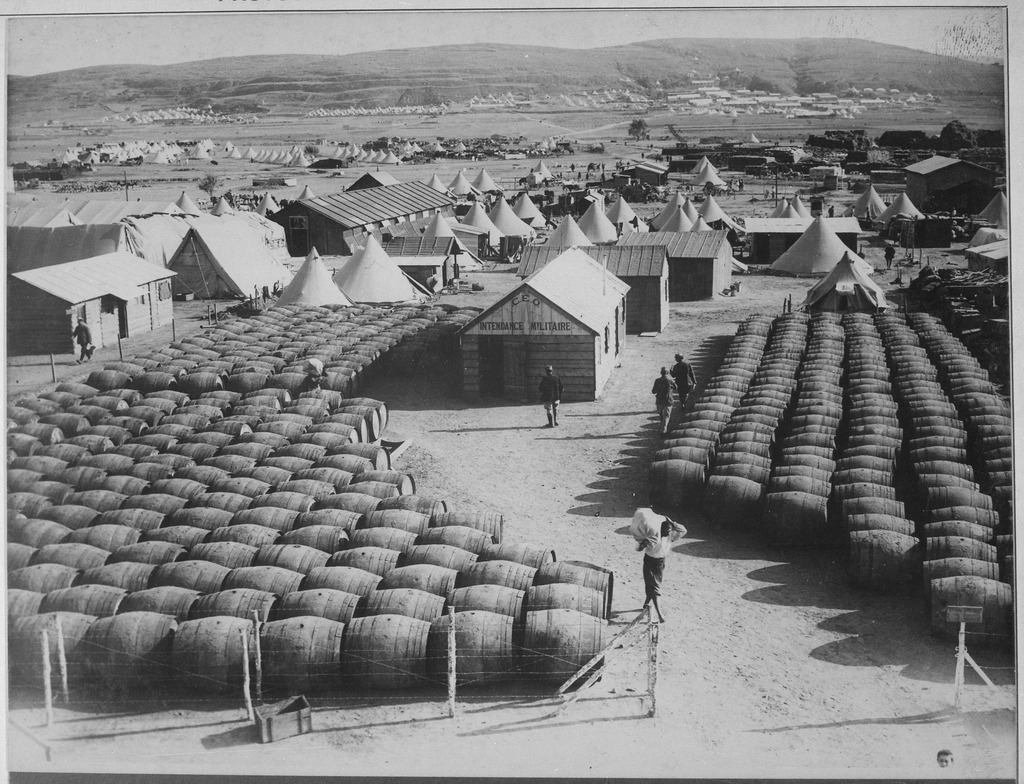
Picture above : Getting priorities right! The French army assembles wine barrels at the Allies camp in Mudros, Greece. Mudros was a base for operations in Gallipoli and held many Irish soldiers.
Base Depots like these were established for distribution and administration, and were used as the main supply stores for soldiers in the war zone.
The ASC also produced bread and meat for the troops, and its Supply Section ran Field Bakeries and Butcheries. Meanwhile, specialised Railway Labour Companies were quickly formed.
Basically, the ASC supervised the important military supply lines from port to front line, along with the camps, stores, dumps, workshops of the rear areas.
It is hard to comprehend just what this supply effort meant with an army that in France alone had been built up to over two million men. It was an extraordinary feat of logistics and Thomas Morgan from Mountjoy Square was a small but important part of that.
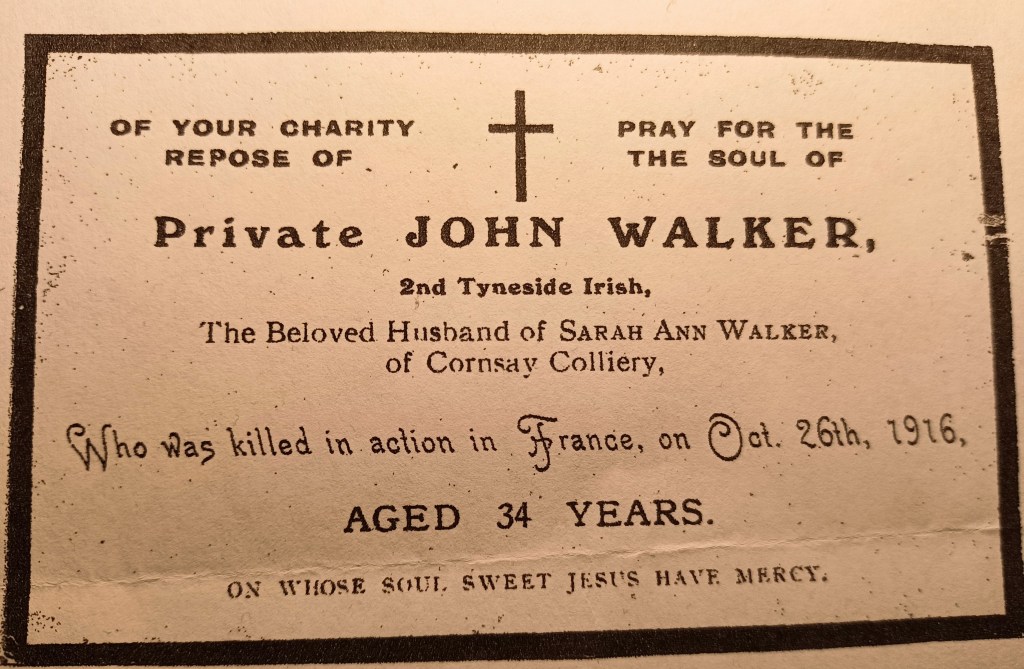
John Walker’s story is a good illustration of the struggles and opportunities of working class life in Ireland and England in the late 19th century.
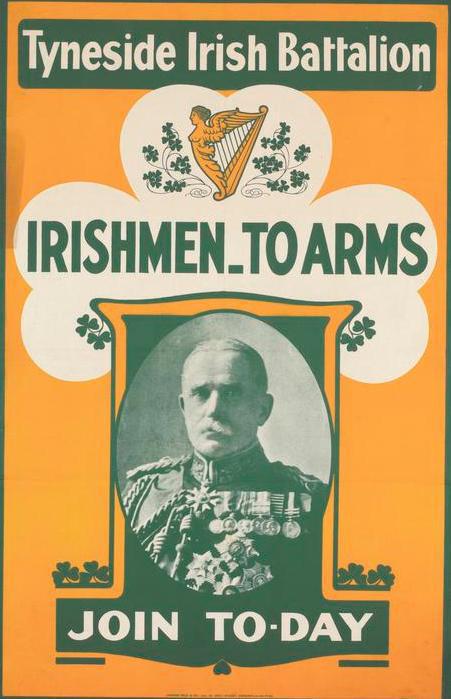
From Kilkenny, John moved to Durham in England where he enlisted with the Tyneside Irish Battalion and fought in the First World War, eventually getting killed at the Somme in October 1916.
Today, John’s great grand daughter, Helen Dje, originally from Wales, lives in north Dublin with her young family.
Pictured Above: Helen Dje at the Burren, County Clare, Ireland
John was born in 1882 to John Walker of Kilkenny and Ellen Kennedy of New Ross, Co Wexford. He was the second of five children.
The Walkers were tenant farmers and with rights of inheritance, living in Castlecomer, County Kilkenny. This meant they were continually renting the land from the landlord, possibly a colonial figure.
This was the precarious situation of most of the Irish population at that time, most of whom lived off the land. The use and ownership of the land was a huge issue in Ireland for centuries and the source of much tension culminating in the Land Wars of the 1880s.
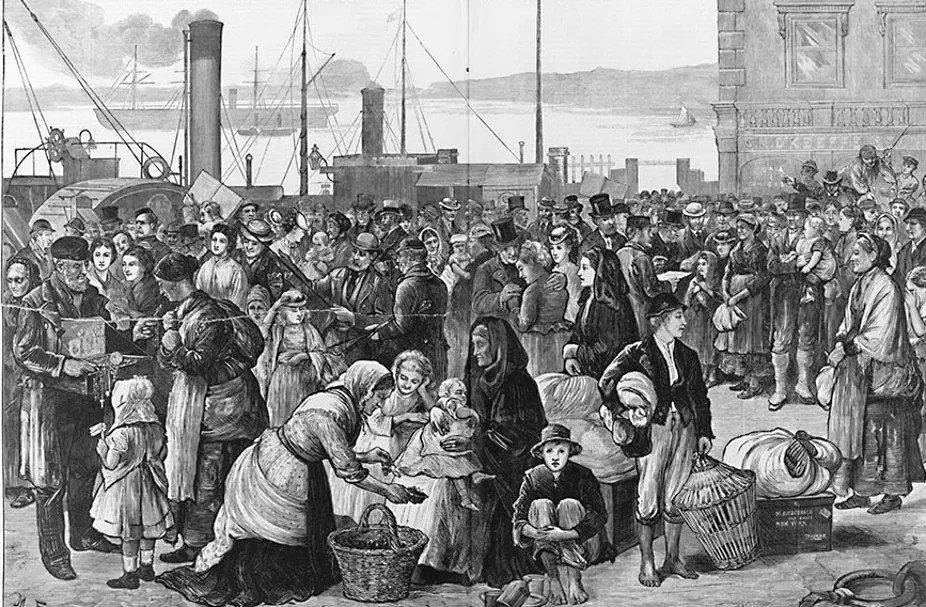
Boarding the Emigrant ships: the Irish Diaspora grows
By 1900, the situation had improved, under various British government Land Acts, but the situation was still precarious for tenant farmers such as the Walkers. Added to this were the complications around rights of succession.
John Walker’s father died when he was young and later his mother remarried Mr Boyle. They had two sons, Dick and Rob Boyle. Later when his mother Ellen died, the tenancy and all property passed to her new husband, and would be inherited by John’s step brothers.
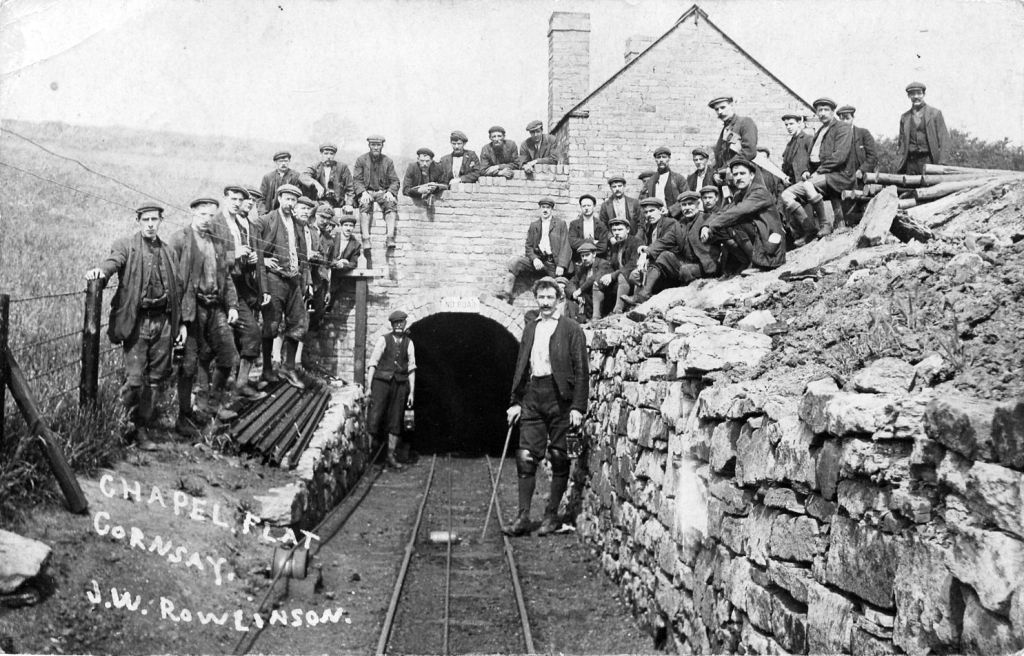
At this stage, all the Walker siblings emigrated to find work, going to either Britain, America or Australia. In 1901, John went to England and a small mining village in County Durham called Cornsay Colliery (pictured below) where there was plenty of work ‘down the mine’
Cornsay Colliery (pic courtesy of George Nairn mining postcards)
This is not an exaggeration : up to 700 men and boys were employed at various activities in Cornsay. Beneath the ground where four rich seams of coal, about a metre thick and discovered in 1868, which were mined and brought to the surface and turned into industrial coke. Also underground was a rich fire clay which was fired into tiles and drainage piping, using up to 270 ovens.
In Cornsay, John lived as a boarder with Irish emigrants Francis and Kate Quinn who had previously emigrated from Ireland after the birth of their third child, daughter Sarah Ann.
John eventually married Sarah Anne Quinn from Thomastown, County Fermanagh, in the North of Ireland. They had seven children – incredibly, all of them were girls.
The First World War began and the army recruitment team came to the village to persuade young men to join up.
According to his family, the authorities ‘touted the war as one to free small nations and mentioned that if Irishmen joined up it would further the cause of Irish independence. With this in mind, John Walker joined up’.
John enlisted at Newcastle on November 9th 1914. He joined the 25th Tyneside Irish Battalion, part of the Northumberland Fusiliers, alongside other Irishmen who had ended up in Cornsay Colliery.
After initial training at home, the battalion joined the 103rd Brigade, 34th Division in June 1915 at Ripon in Yorkshire before moving to Salisbury Plain, for final training in late August. They proceeded to France in January 1916 where the 34th Division concentrated at La Crosse, near St Omer.
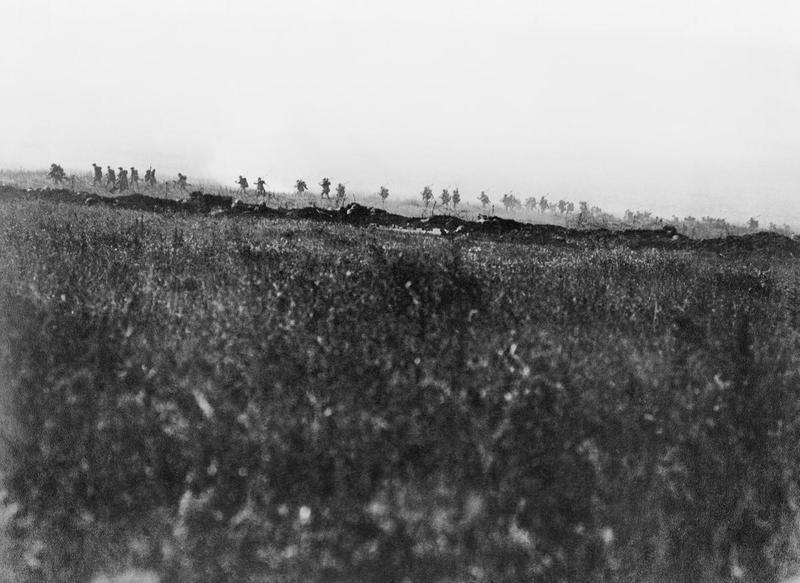
After a period of trench familiarisation, they moved to the Somme and saw action at the Battles of the Somme, including the capture if Scots and Sausage Redoubt, the Battle of Bazentin Ridge, Pozieres Ridge and the Battle of Fleurs – Corcelette. The latter was with the Divisional Pioneers as part of the 103 rd Brigade.
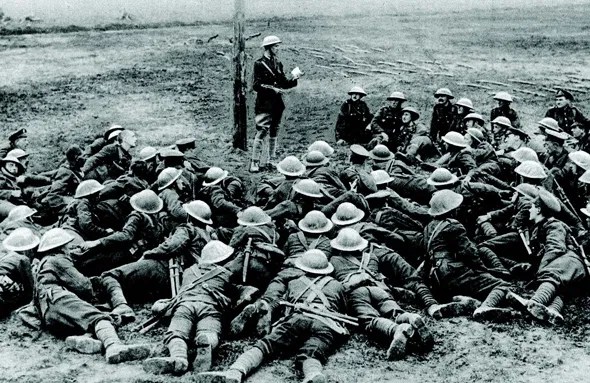
The 25th Battalion did not take part in any further major battles. However, they stayed on in the Somme, engaged in day to day trench warfare.
Pictured above : the Tyneside Irish at the Somme on the fateful first day, 1st July 1916
John was a bandsman and so he did not do a great deal of figthing. He was in the Ambulance Corps and looked after the wounded and dead. According to his family, he was stretchering some wounded off the battleground at the end of fighting when he was shot in the back. He was 34 years of age.
He is buried at Cite Bonjean Military Cemetery, Nord in France.
His wife Sarah Anne had seven children to bring up on her own. Two died but five survived. She received all monies due to John, and a pension for herself and her children. She later lived at Elderwood Gardens, Gateshead, County Durham.
The family assert that Sarah Anne was always bitter that her husband had thought he was fighting to free Ireland and died with this in mind. ‘When freedom came with the Republic in 1948, her part of Ireland remained under British rule’.
1948 was the year that Southern Ireland declared itself a Republic. However, the country had been independent of Britain since 1922.
This is the story of a Dublin woman in search of the grave of her granduncle who died in Belgium in 1918, and who was unaware that an author in Belgium was trying to find relatives of the same man.
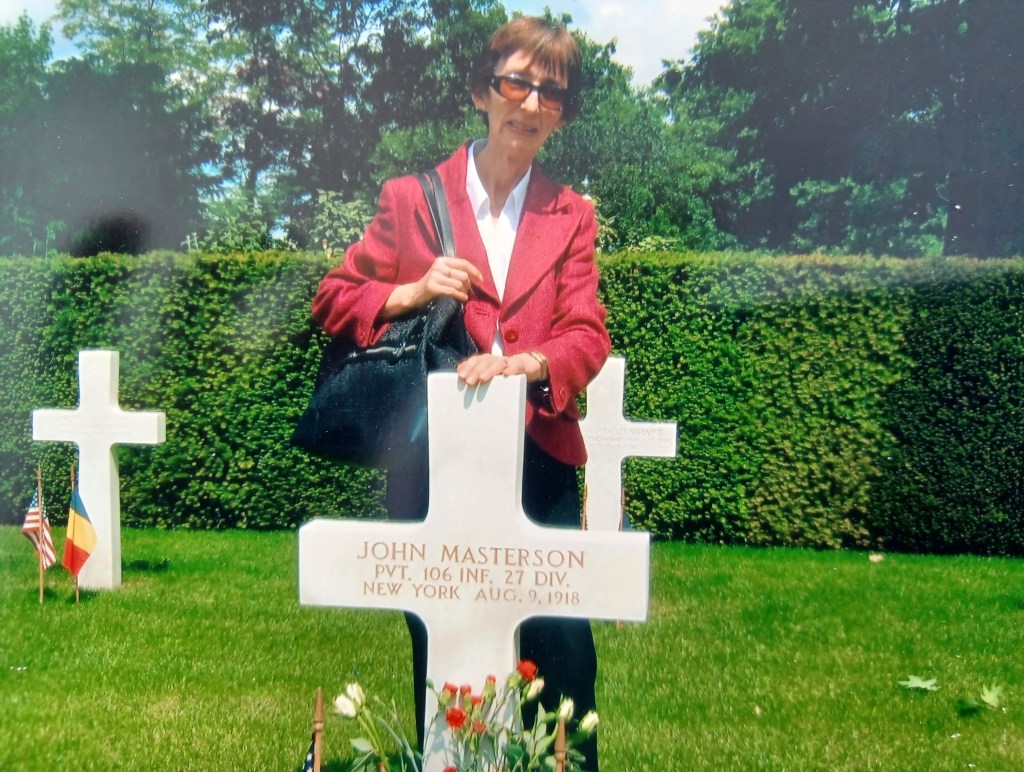
The author Patrick Lernout was compiling a book about the Flanders Field American Cemetery in Waregem, Belgium and was seeking details on a soldier buried there called John Masterson – the granduncle of Dublin woman Breda Gaynor.
Eventually, Breda made contact with Lernout and tracked down the grave of Masterson, which had been lost to her family for almost a hundred years.
Breda was then invited to the 90th anniversary of the Flanders battle and got to visit the grave of her granduncle, which she has done many times since.
In 2016, her sister Eileen, also visited the grave on Memorial Day, along with her daughters (pictured below). The discovery of their granduncle’s grave, and visiting it, has played a major part in bringing Breda and Eileen back together. For many years, they had not been in communication.
It is a fitting tribute to the memory of John Masterson and to the pursuit of his grave that this positive side effect has happened. And it is something which often occurs for such families in pursuit of their history.
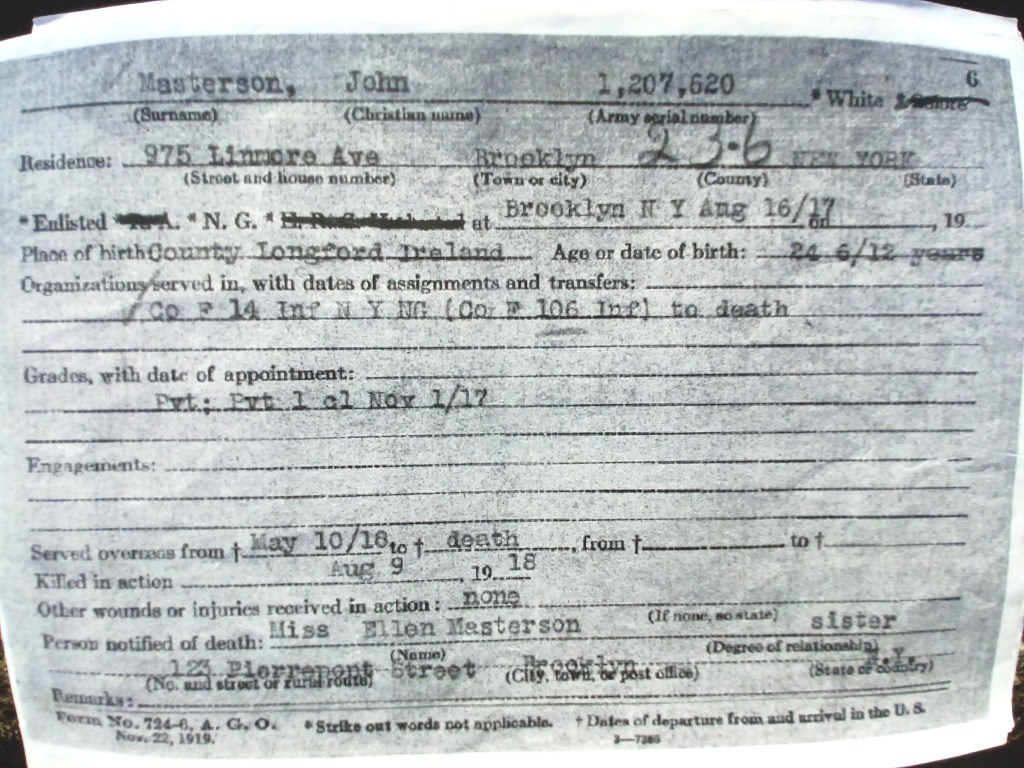
John Masterson, from Abbeylara in County Longford, was killed in action on 9 August 1918, aged 24. He had not long been in the United States, and yet found himself back in Europe within just a few years to fight in the First World War. This was a not uncommon experience for many Irish emigrants.
John Masterson lived at 123 Pierrepoint Avenue in Brooklyn, New York, with his sister Ellen Masterson, but she returned to Ireland.
John volunteered with the 14th Infantry Regiment of the New York National Guard, which later became the 106th Infantry Regiment.
The ’14th’ were a legendary regiment which fought in the American Civil War. The Confederate General, Stonewall Jackson, gave them the nickname the ‘red legged devils’ due to their red trousers but also their prowess and refusal to surrender ground.
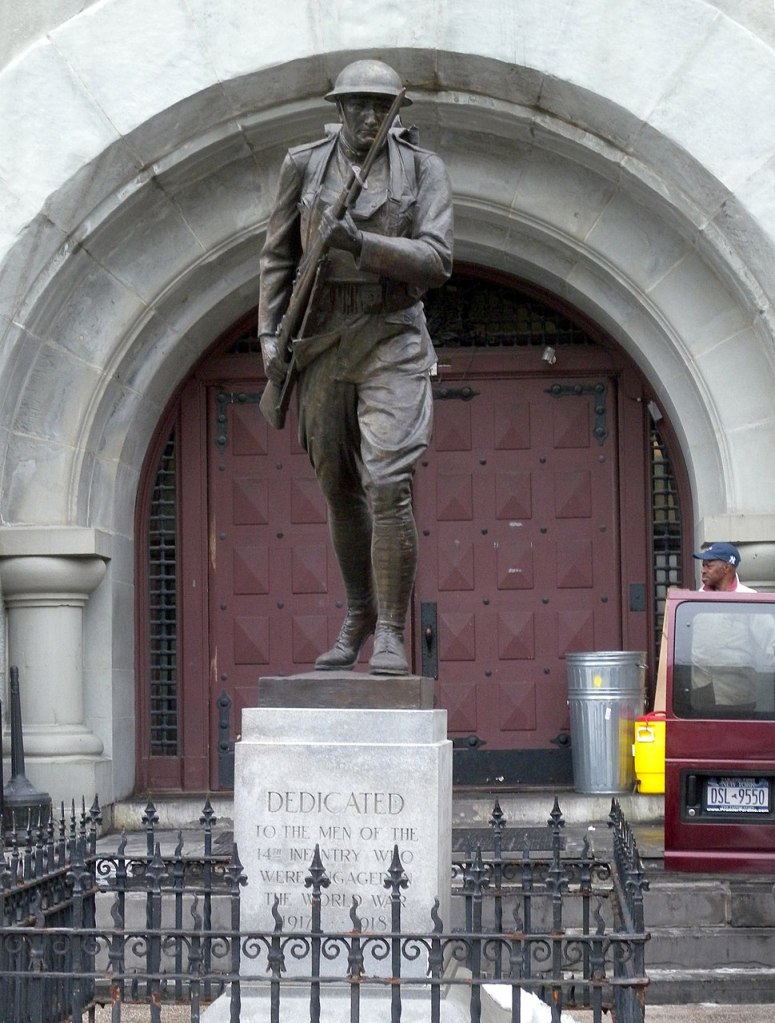
For this reason, the regiment retained its ’14th’ designation despite subsequent absorption into a broader New York regiment. The 14th later fought in World War One, an involvement marked by the sculpture of a Doughboy (pictured below) outside the 14th Regiment Armoury in Park Slope, Brooklyn.
In August 1918, Masterson and three others from ‘the 14th’ were killed when a German shell hit their shelter during an intense bombardment. It was in the final months of the war. In his last letter home, John had described large numbers of Germans being taken prisoner.
Above : A Brooklyn newspaper describes how Private John Masterson died.
John was one of thirteen children raised on a small farm in Derragh, Granard, County Longford. His twin sister, Brigid, was Breda Gaynor’s grandmother.
John’s brother Bernard also served in the Great War (with the British Army), and severely injured his arm. This injury did not, however, prevent his later involvement in the Irish War of Independence and in the Irish Civil War.
Bernard’s son, also called Masterson, served for many years in the Irish Army.
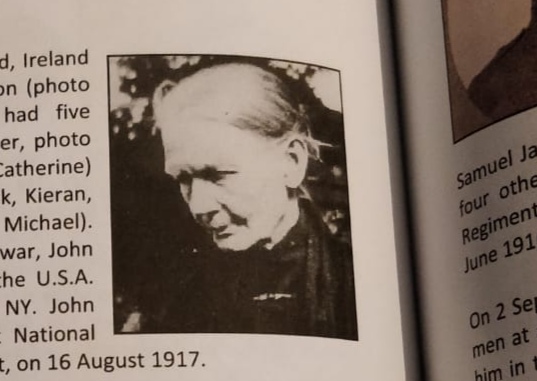
Pictured below: John’s mother, Bridget.
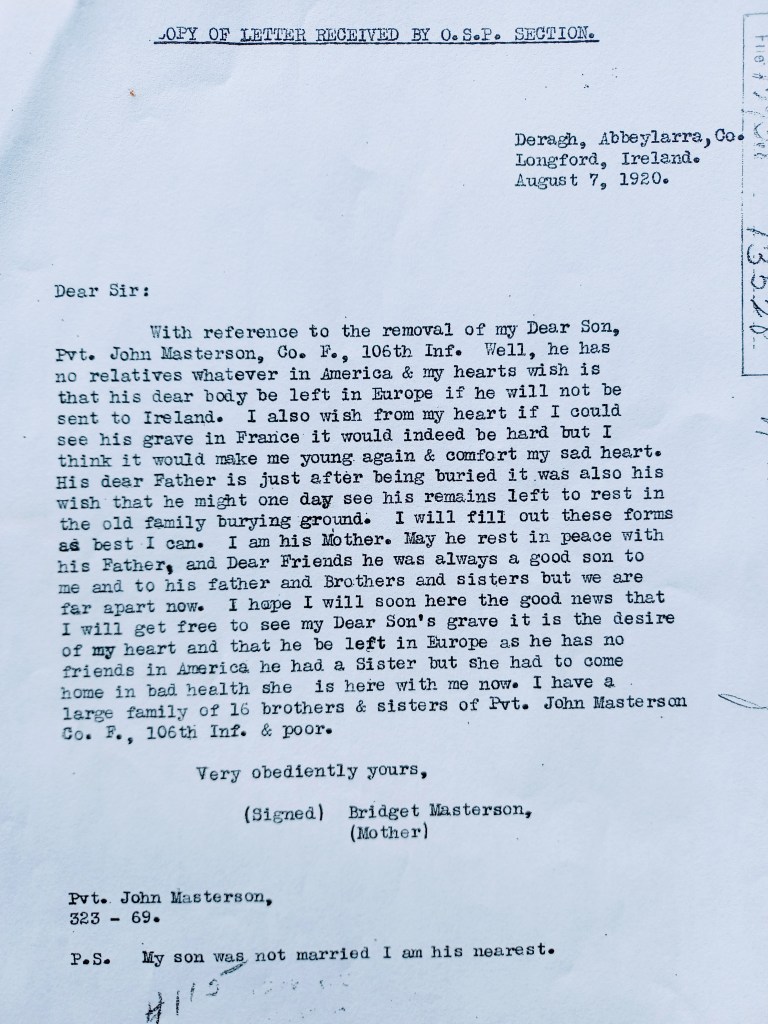
Pictured below: a passionate letter from Bridget Masterson to the US military, hoping that John’s remains stay in Europe and wishing that she could see her son’s grave.
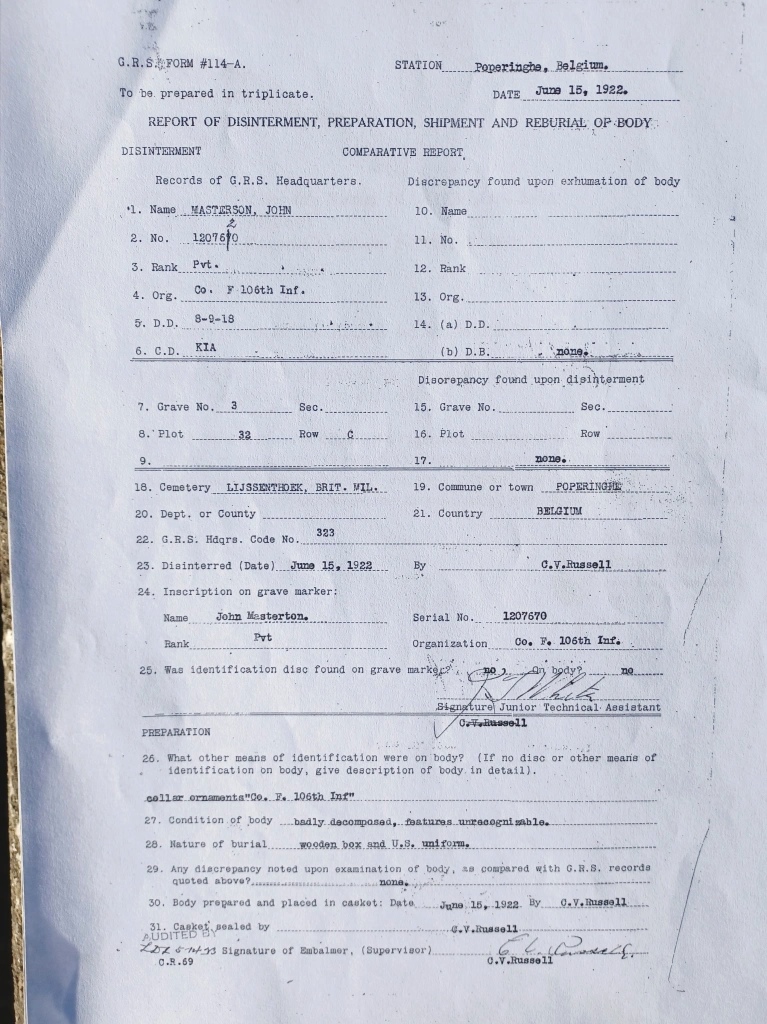
Pictured below: US military form for reburial of John’s remains in 1922
Pictured below: US military letter regarding a new grave for John Masterson
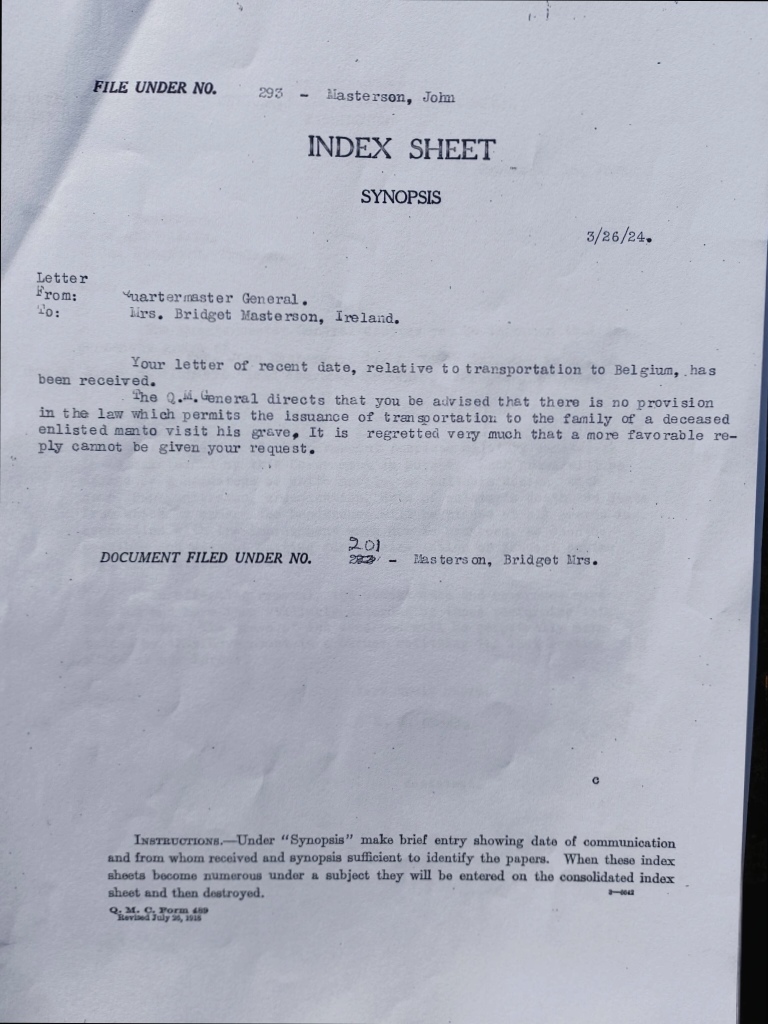
Pictured below: letter from the US military explaining that it cannot provide a family visit to John’s grave.
Contact was then lost with John Masterson’s grave. Over the decades his relatives passed on and the precise location of his grave became gradually unknown. The correspondence pictured above was only unearthed much later when Breda Gaynor made investigations in 2008.
As a child, Breda had often heard her father speak about how one day ‘they must track down Uncle John’s grave’. It was a constant refrain with him. By 2008, Breda’s father had passed on, but she then decided to follow up on her father’s wishes and speculation. She was fascinated by Uncle John’s story.
Breda lives in her family home on St Ignatius Avenue, in Drumcondra, one of the long, tightly terraced streets leading down to Dorset Street in Dublin’s north city. If you removed the cars, it could be a streetscape from a hundred years ago, and is not unlike similiar streets in Belfast and the north of England.
Breda grew up here and her own personal story is very interesting, as is her knowledge of the area, with many stories about local characters and events. Her father was an inspector with the Monuments section of the Office of Public Works and Breda went to university, something very unusual for the area and the time. Her husband sadly died some years ago.
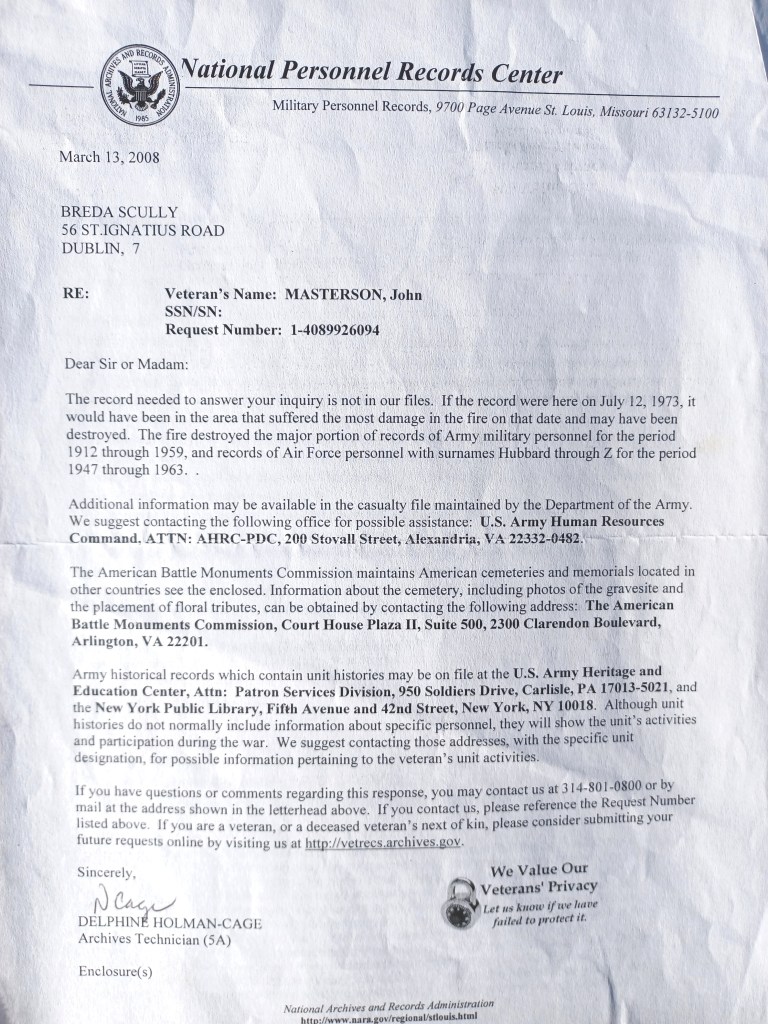
In 2008, Breda began a search for the location of her Uncle’s grave. She wrote to the US military, which replied (image below) stating that it had no knowledge of John Masterson’s grave. This was mainly due to a fire in 1973,it claimed, which destroyed a large section of the military’s records.
However, as with so many searches like this, and especially for military and family records, the internet has changed everything and Breda Gaynor was able to trawl online, in a way that previous generations could not.
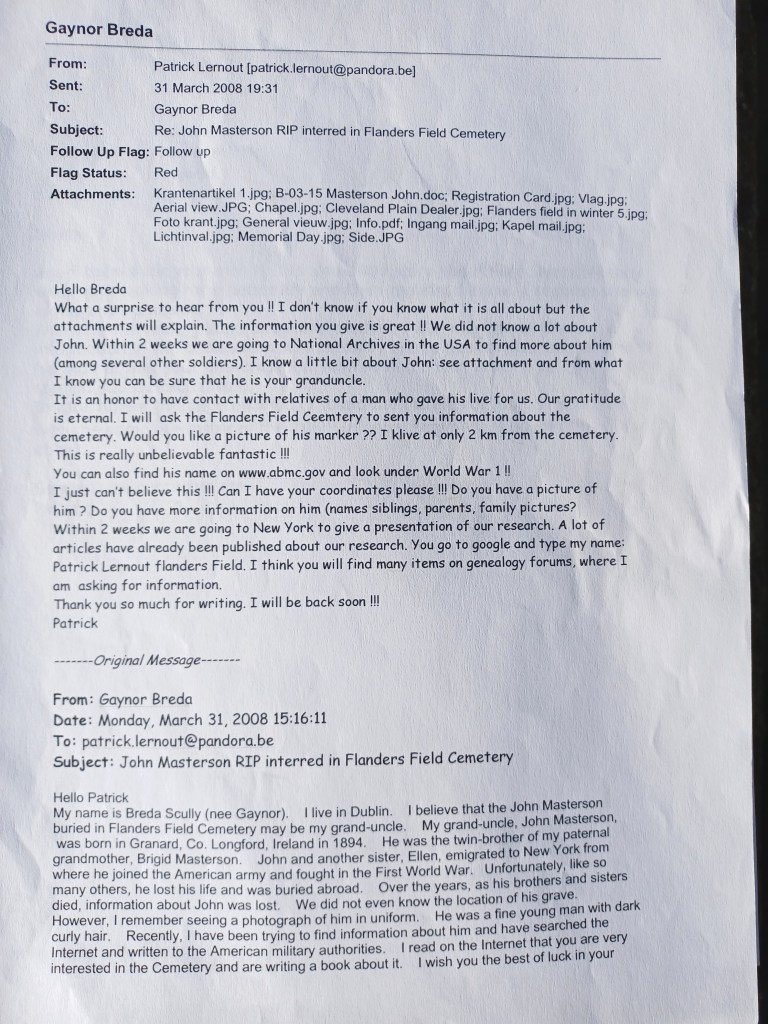
Eventually she found a family heritage site for people named Masterson, with a message on it from Patrick Lernout, in Belgium, stating that he was writing a book about the men buried in Flanders Field Cemetery and did anyone know about a man buried there called John Masterson. Lernout’s co-author was Christopher Sims.
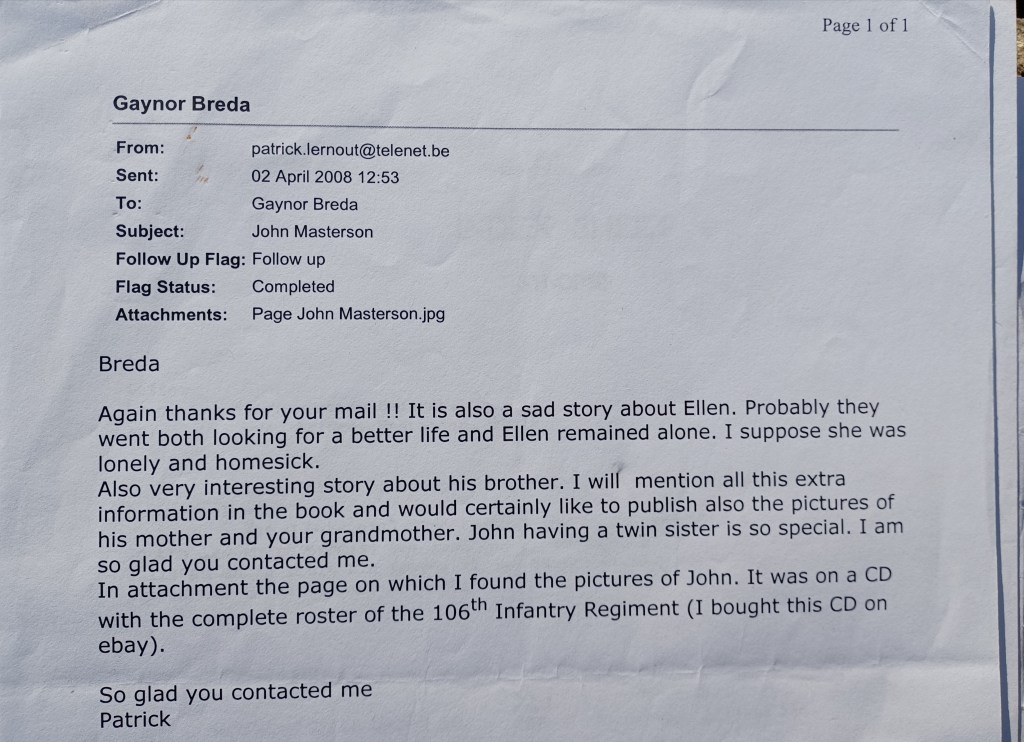
The message was two years old but Breda was understandably excited and immediately wrote to Patrick. He replied and their correspondence is below:
Pictured below: letter from Patrick Lernout to Breda Gaynor in April 2008.
Breda Gaynor and Patrick were delighted to have made contact with each other and to have tracked down a family for the grave of John Masterson.
Breda was then invited to the 90th anniversary of the Flanders battle in Waregem, Belgium where she finally visited the grave of her granduncle.
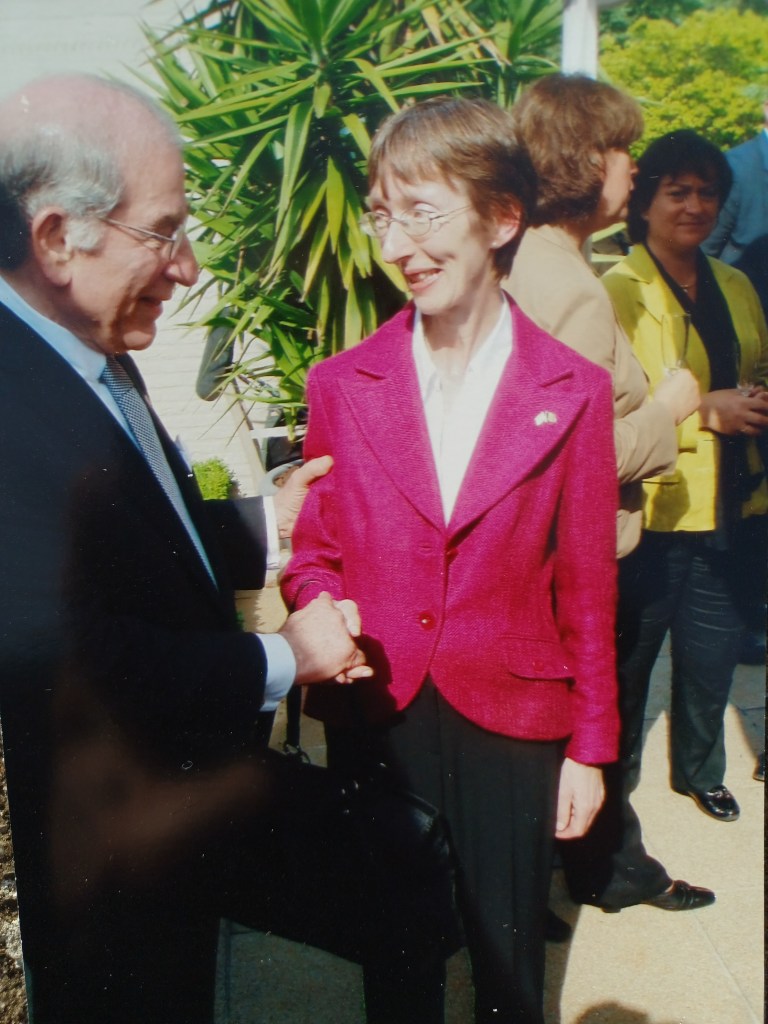
Above: Breda meets the US Ambassador, Sam Fox.
Below: Breda meets Patrick Lernout and Christopher Sims in Flanders Field American Cemetery.
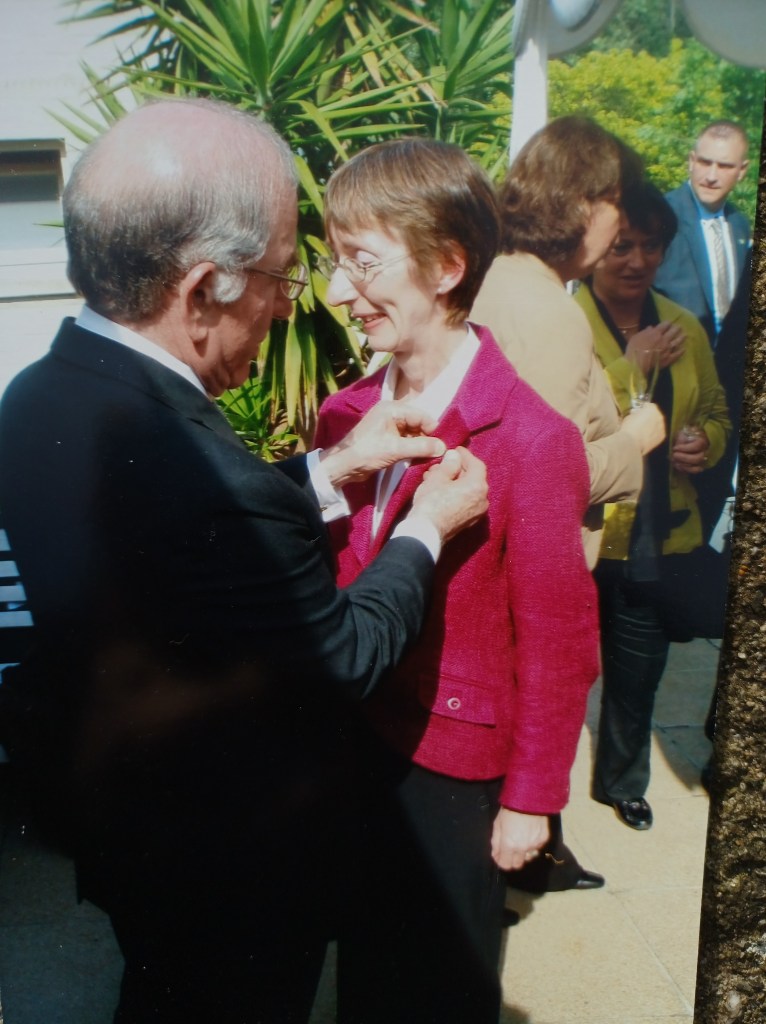
Pictured below : Breda receives a commemorative badge from the US Ambassador.
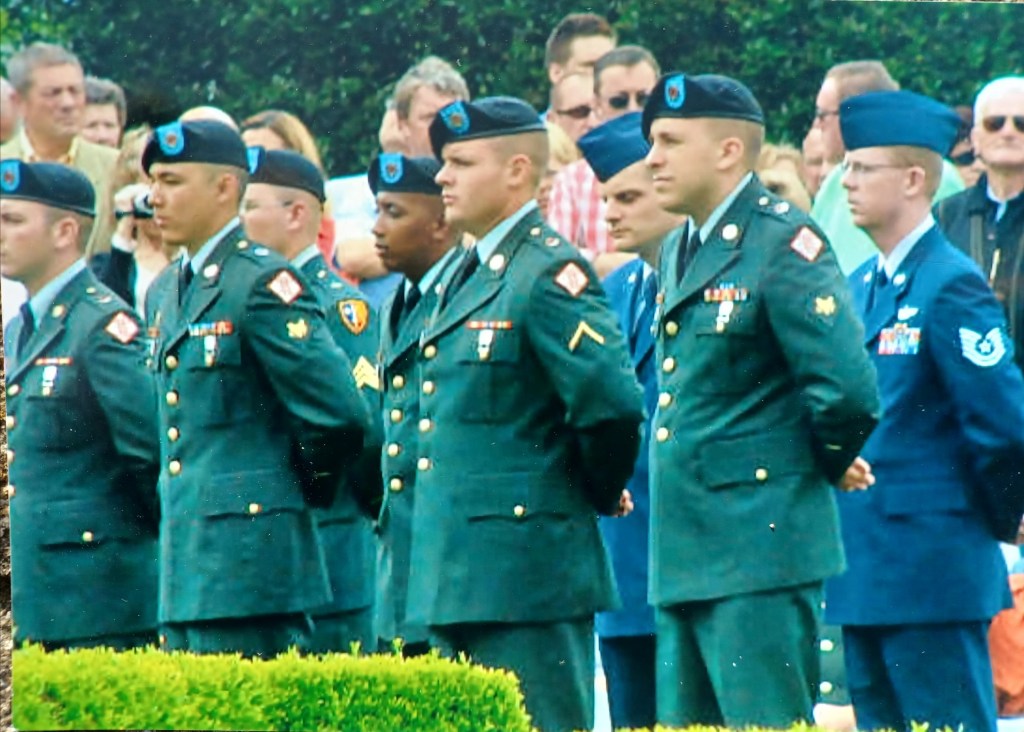
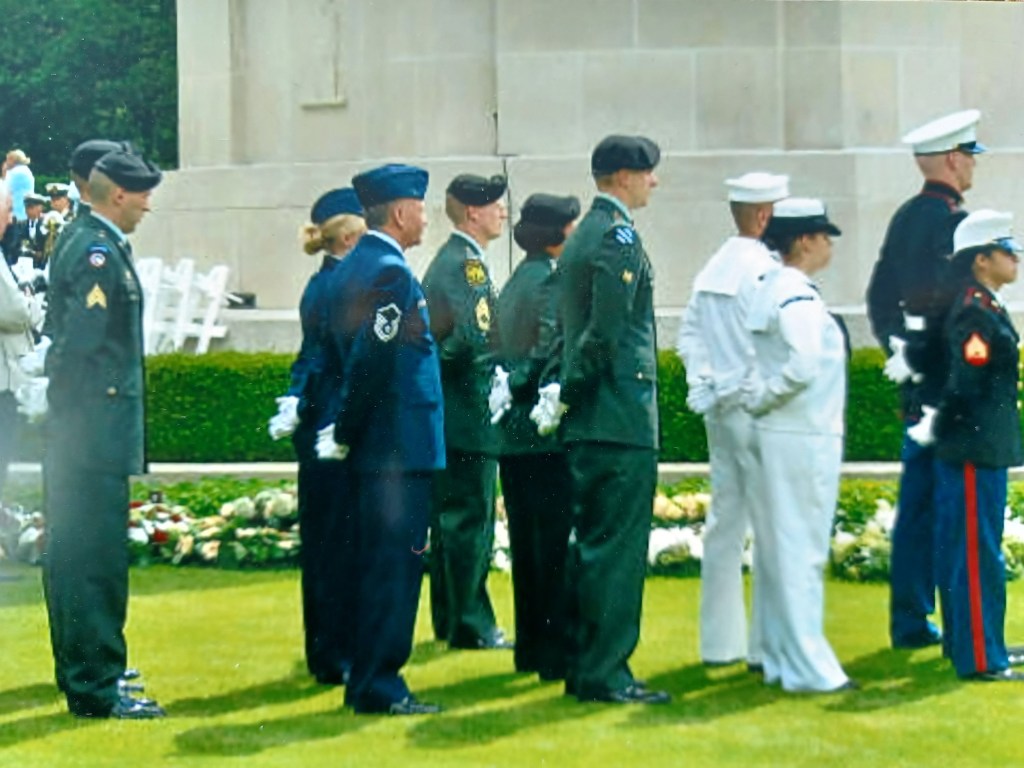
Below: ceremony line up by serving US soldiers.
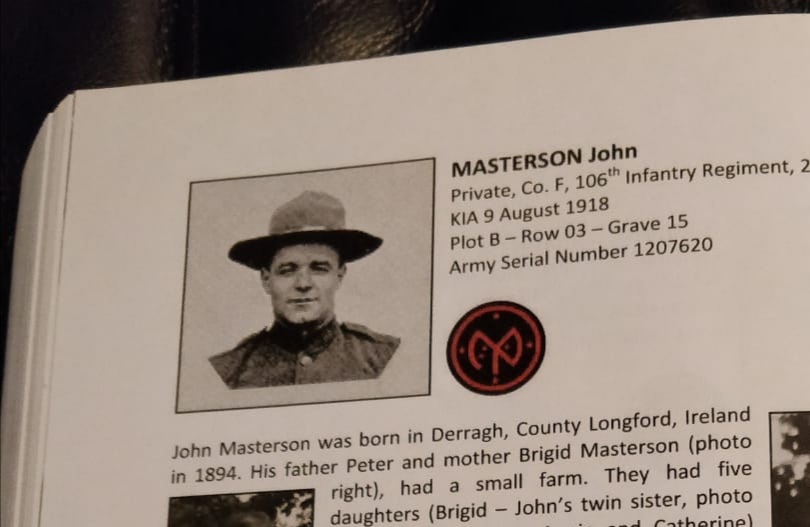
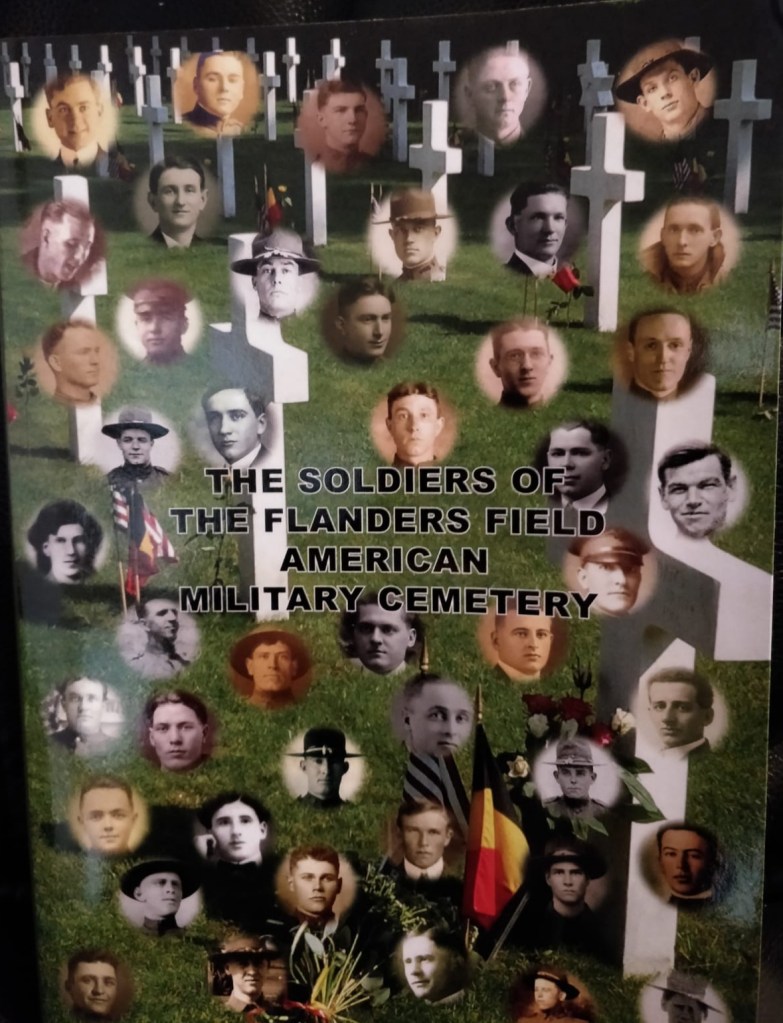
Pictured below is the cover of the booklet compiled by Patrick Lernout and Christopher Sims about the Flanders Field American Cemetery. It was eventually published in 2017. Much research has gone into its compilation, with approximately a page per soldier, and many photos.
Patrick Lernout lived near the Cemetery and his interest in it arose when, as a schoolboy, he would pass by and wonder about the strange names on the markers.
Below : the page on John Masterson in the booklet.
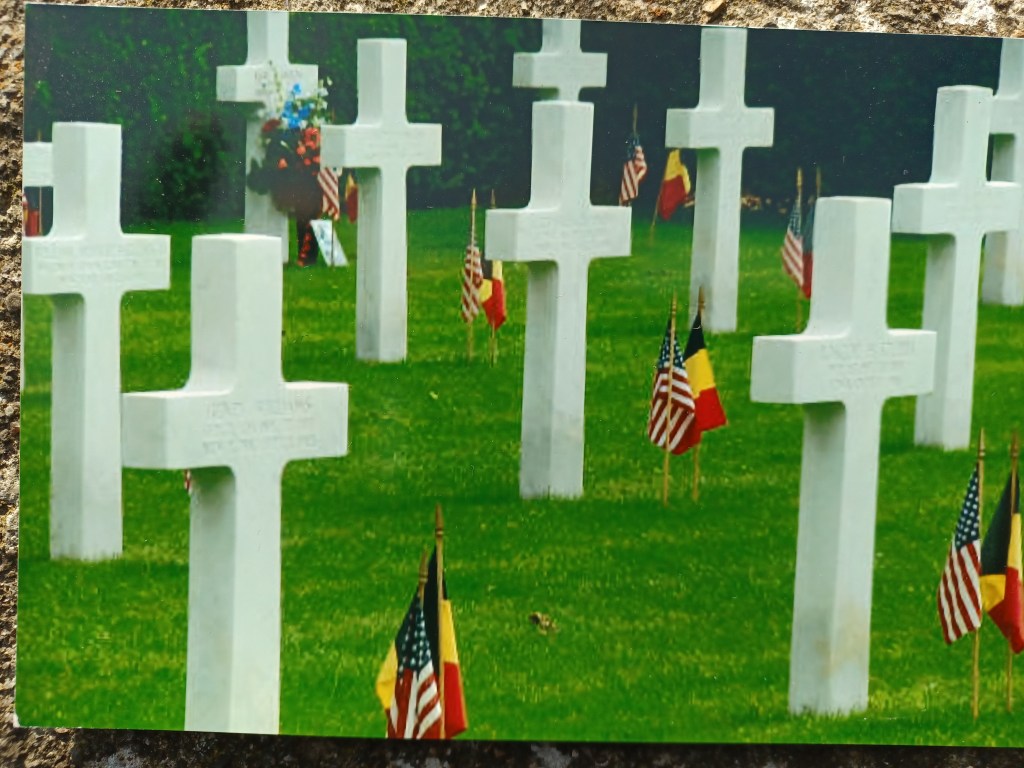
Pictured below : Flanders Field American cemetery.
Apparently, a local couple, Luc and Regine De Groote-De Clercq, have adopted John Masterson’s grave and place flowers on it on his anniversary and at Christmas.
Below: line up by US military personnel.
Pictured below : wreath-laying by US Ambassador and Yves Leterme, Prime Minister of Belgium.
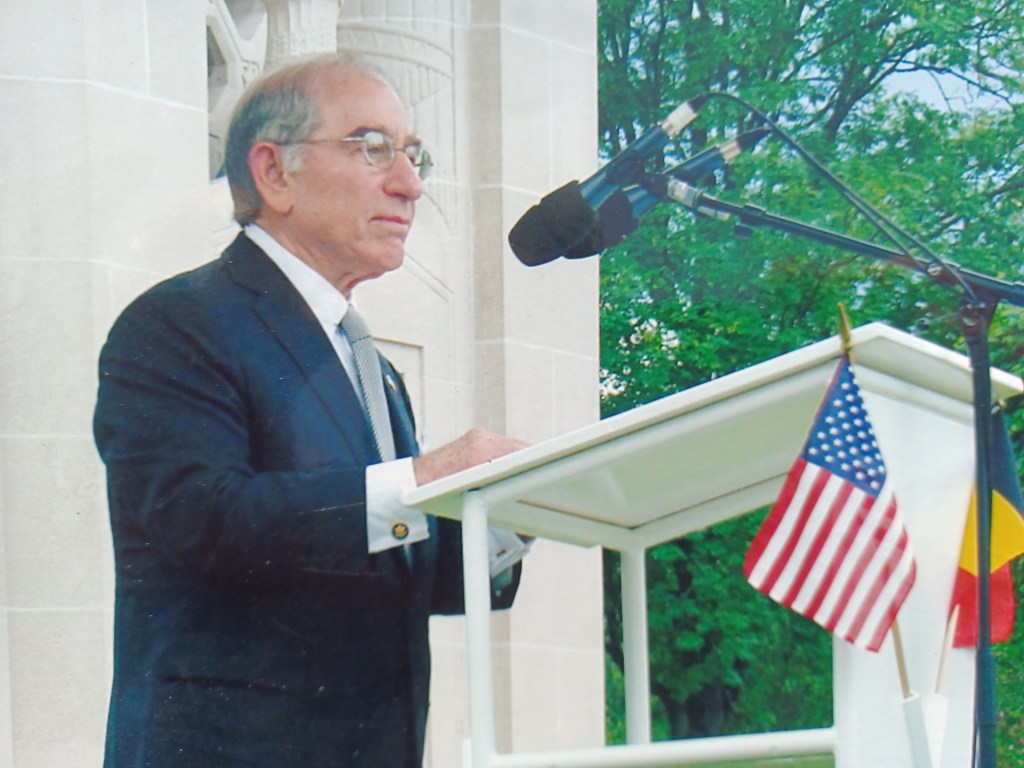
Below : speech by US Ambassador, Sam Fox.
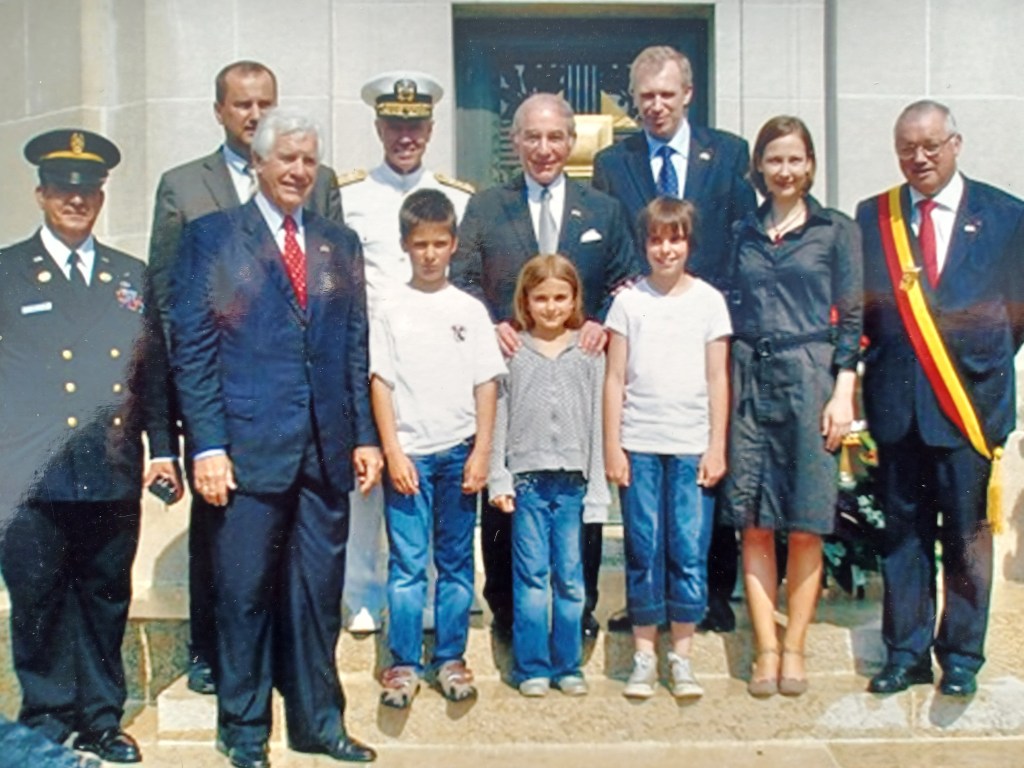
Pictured below : group shot of honoured guests.
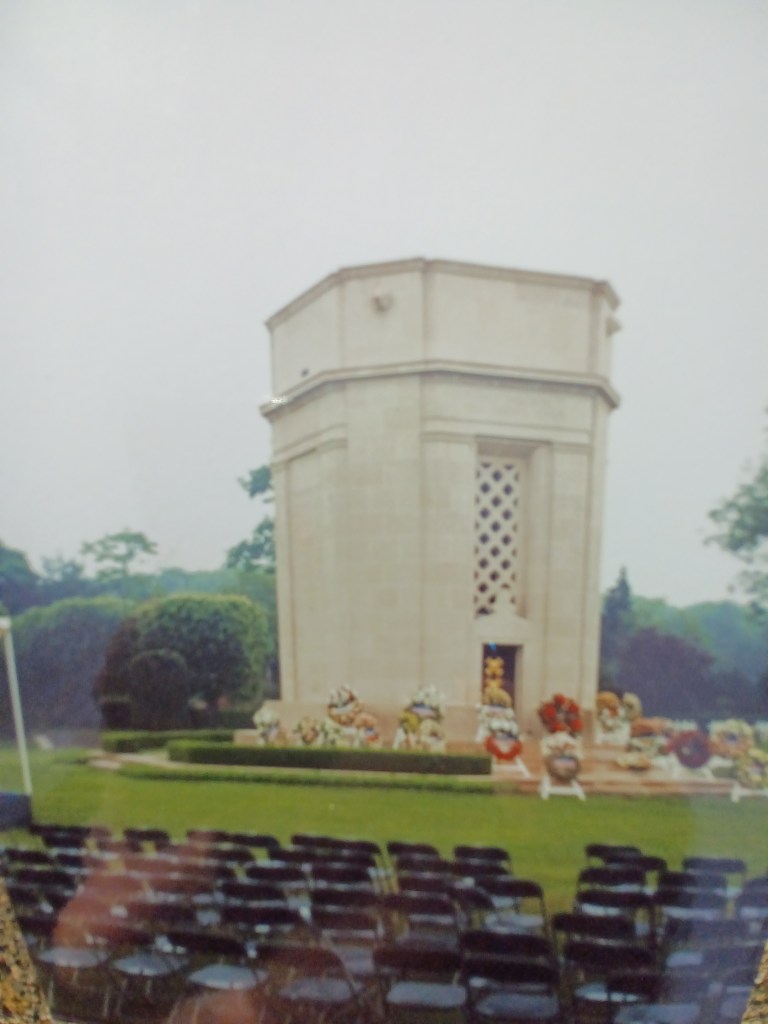
Below : Memorial Tower at Flanders Field American Cemetery. (This, and all pictures here, courtesy of Breda Gaynor.)
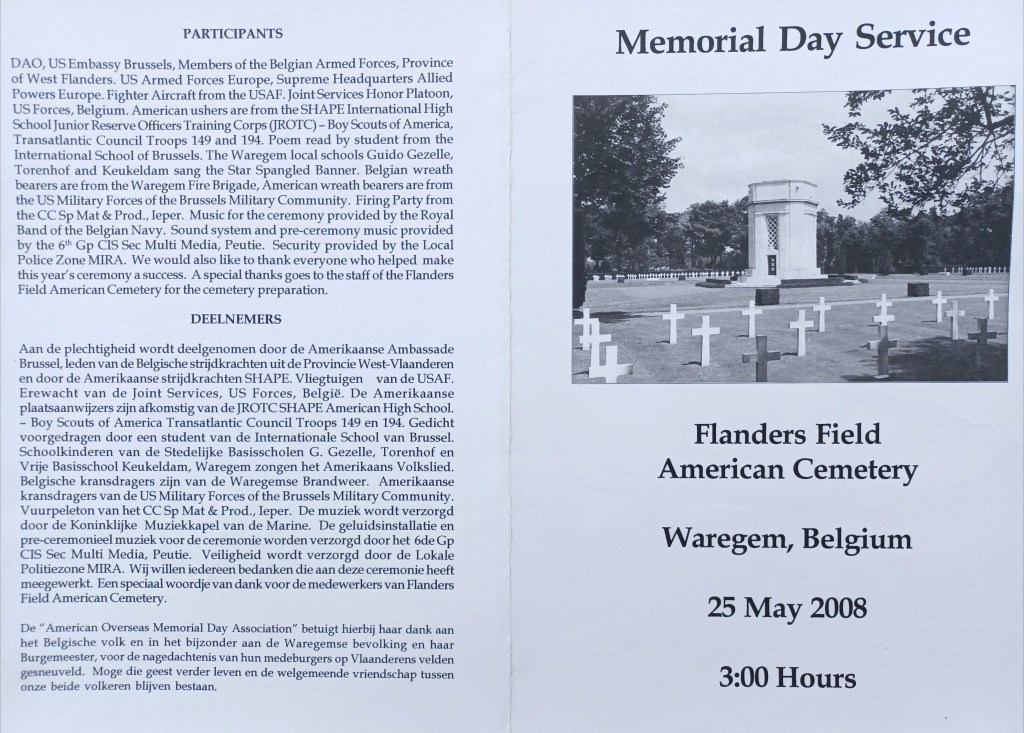
Below: Programme card for the Memorial Day Service.
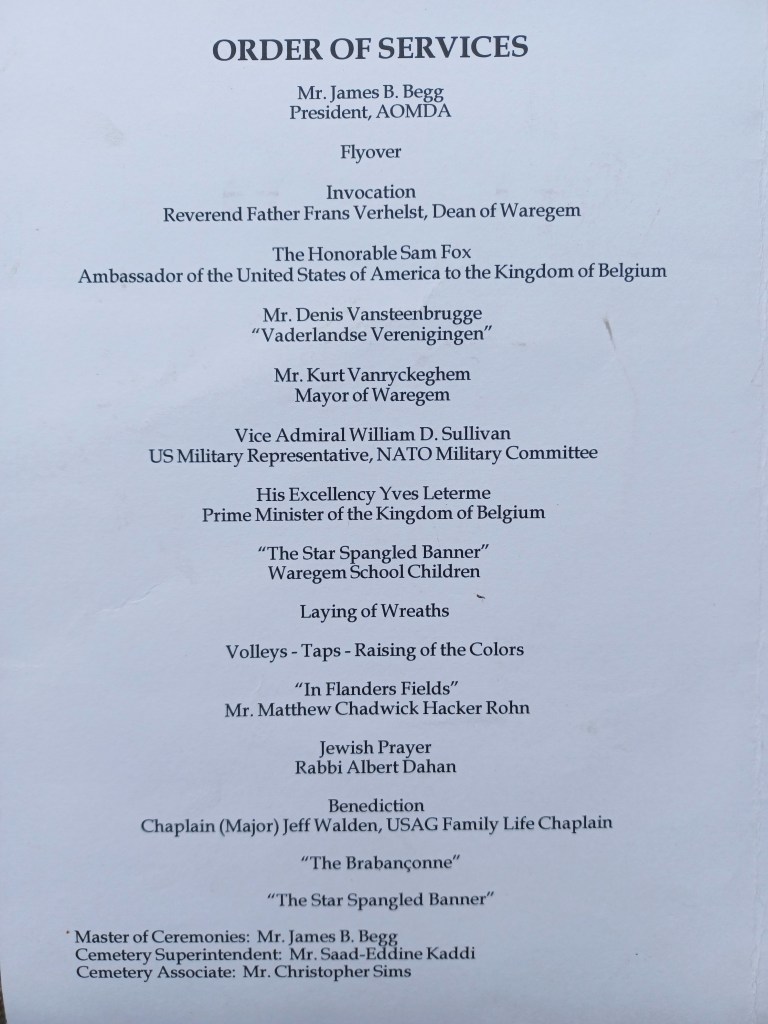
Below : Running order for the Memorial Day Service.
Below : Back in Dublin – Breda Gaynor with Eamon Delaney.
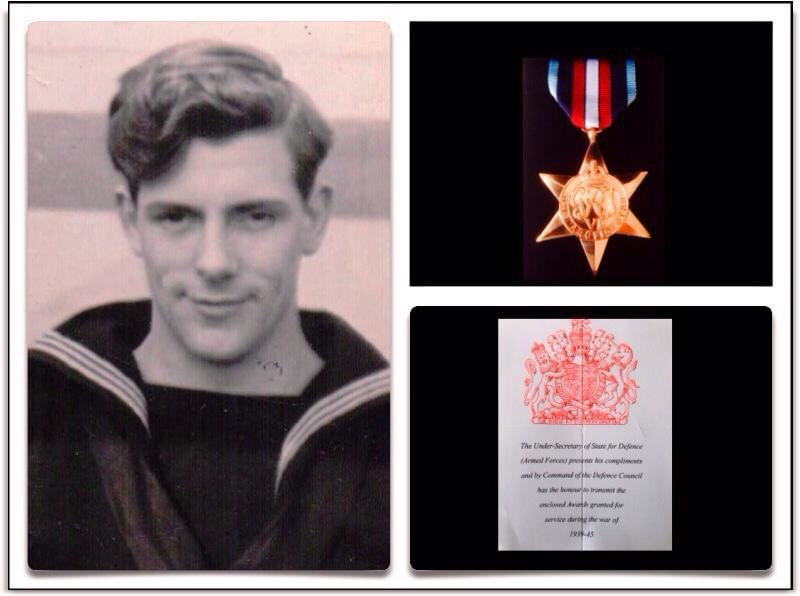
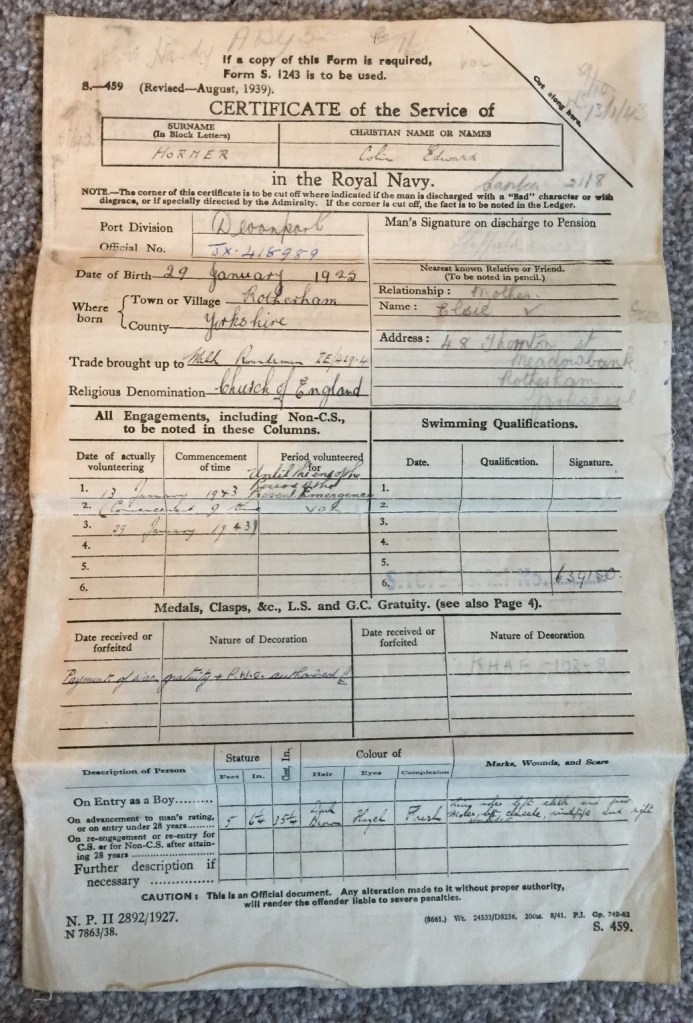
Colin Horner was a sailor on the HMS Hardy when it was torpedoed in the Artic Ocean by a U boat during the Second World War. Blown overboard, he managed to survive in the icy waters until rescued, and went on to live a long and fruitful life. Thirty five crew members were not so lucky and lost their lives
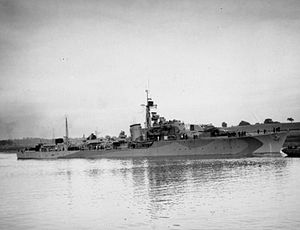
The HMS Hardy was a V-class destroyer escorting Convoy JW 56A when it was hit by the German submarine U-278 on January 30 1944. The destroyers HMS Venus and HMS Virago rescued the survivors and sank the damaged Hardy. The HMS Virago sustained damage to her bow while in contact with the Hardy and was later repaired by Russian workers while at the convoy destination in Murmansk.
Like many such ships, the HMS Hardy (pictured below) was built by John Brown & Company at Clydebank, Scotland.
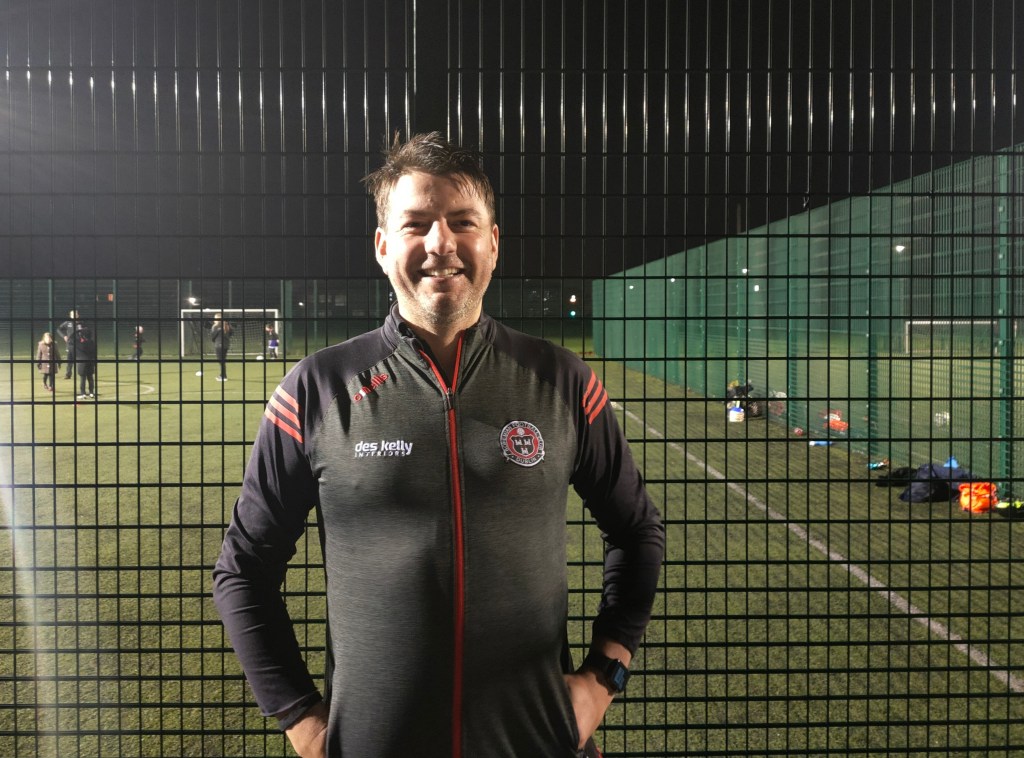
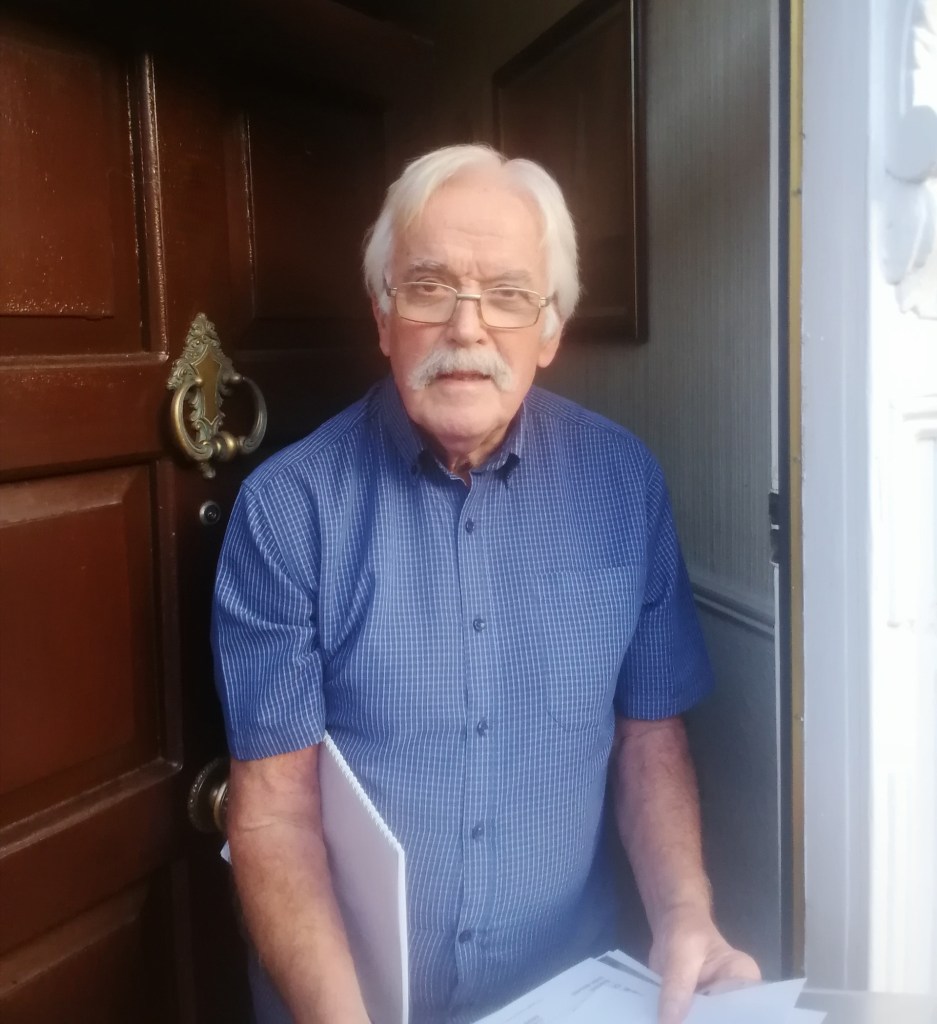
Today, his grandson Tommy Horner (pictured below) lives in north Dublin with his family. He is a fitness coach and also helps train youths with the Bohemians FC soccer academy.
Tommy is the second ‘Bohs’ coach on this site. In a separate entry, Phil Flynn, describes how his grandfather Patrick Flynn, a sapper from East Wall, tunneled under the Germans in World War One.
Thomas Horner train with Bohemians youths, Dublin
Your own name : Thomas Horner.
Your relative : Grandfather, Colin
Period of activity: World War Two, naval war
Specific regiment: The Royal Navy
Areas served in: The Artic Ocean, the Mediterranean, the Indian Ocean etc
Did you have much contact with him?
Yes, I used to regularly talk to him about his wartime experiences. In fact, I recorded much of it on an old phone but the mobile phone got lost. Hopefully, it’ll turn up!
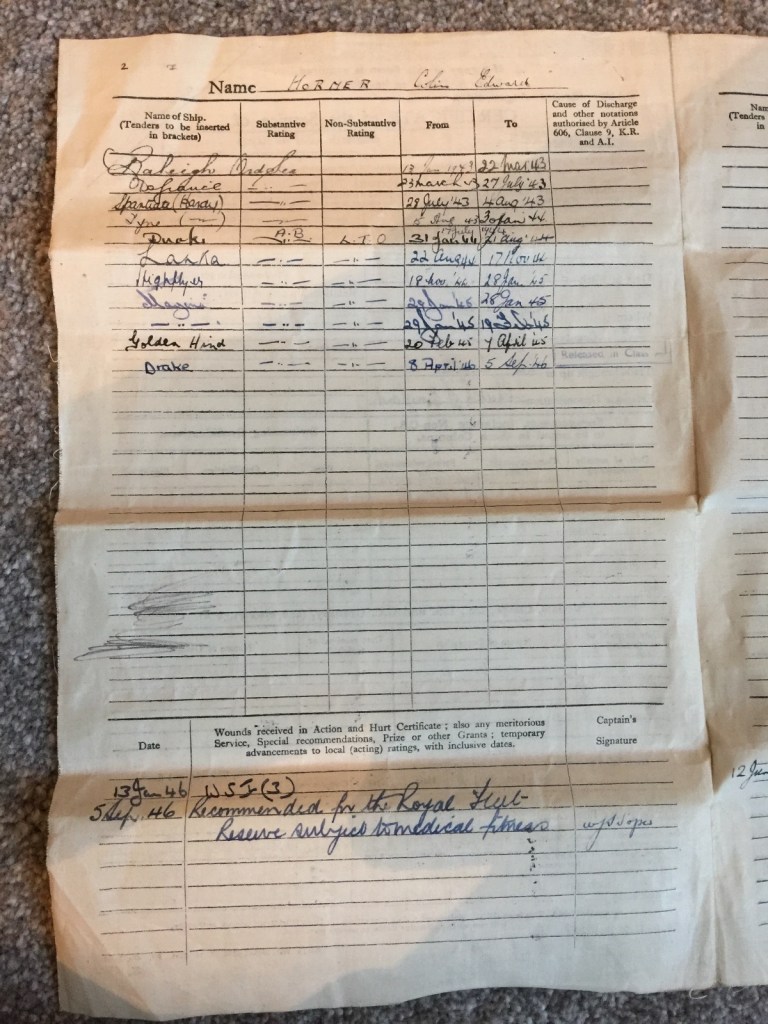
Pictured above : a log of some of the many ships which Colin Horner served on, including the Raleigh, the Defiance and the Golden Hind.
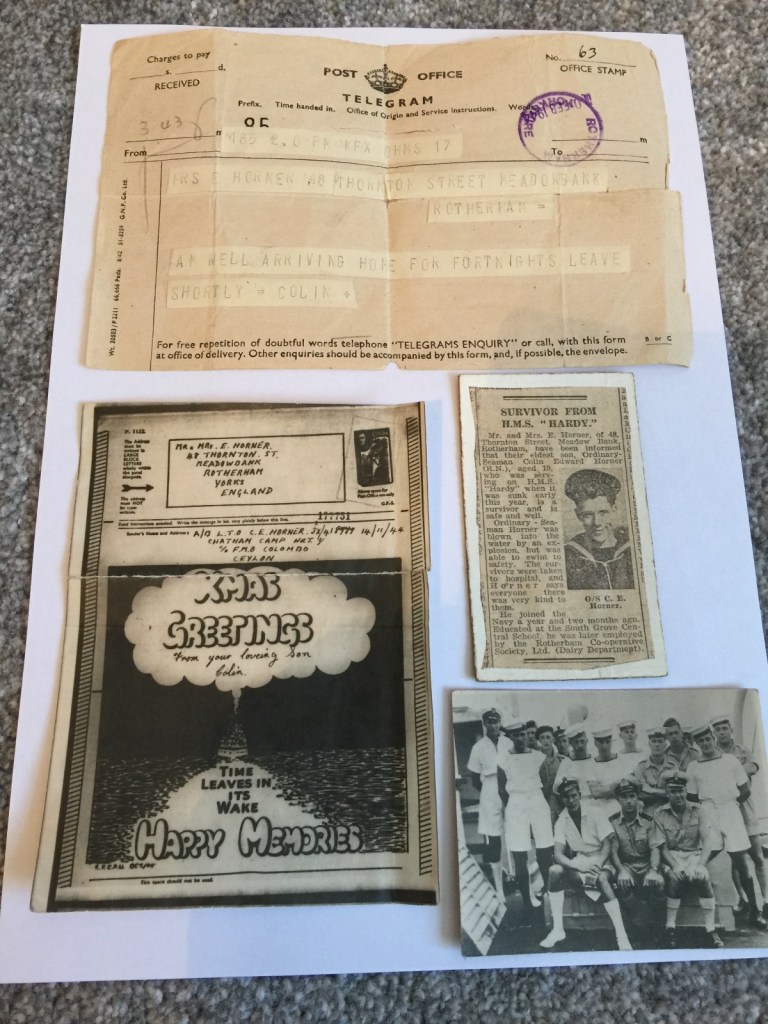
Pictured below : scrapbook items, including a postal greeting from the British military base in Chatham, Colombo, in Ceylon (now Sri Lanka). Also a newspaper cutting of how Horner survived the attack on the HMS Hardy.
Pictured below : Royal Marines training with 40mm Bofors field guns at Chatham base in September 1943. The HMS Hardy was also equipped with twin 40 mm Bofors cannon, as well as other guns and mortar tubes.
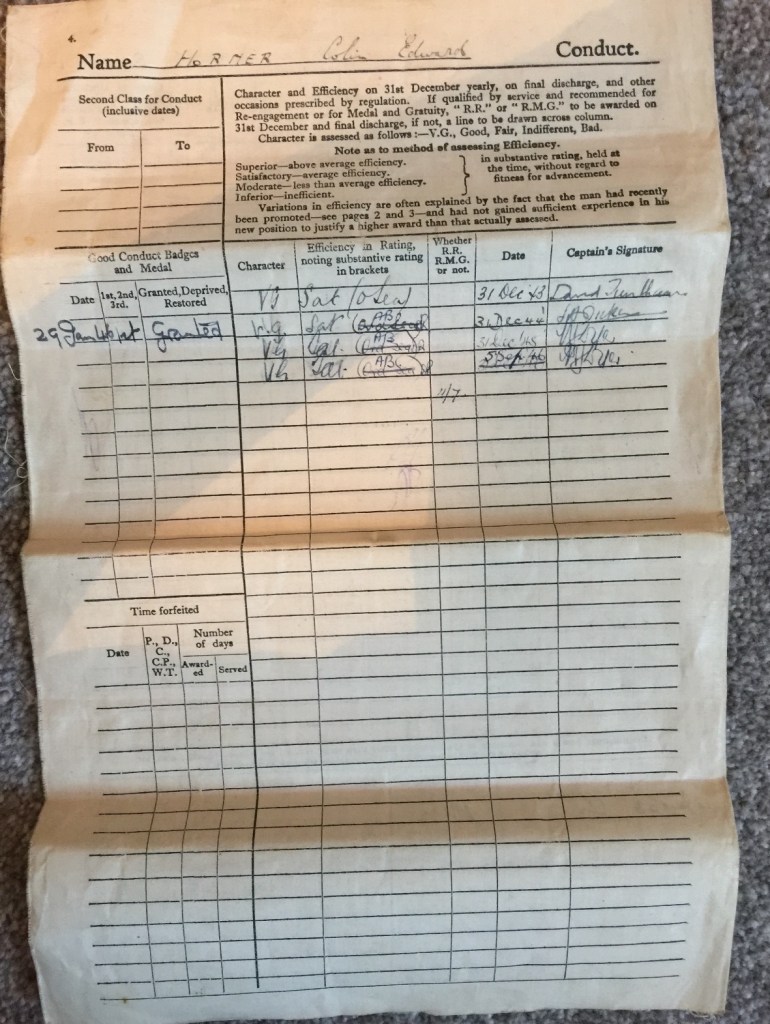
Pictured below : Horner ‘s Conduct sheet, from 1944-46.
Pictured below : Horner ‘s Certificate of Service
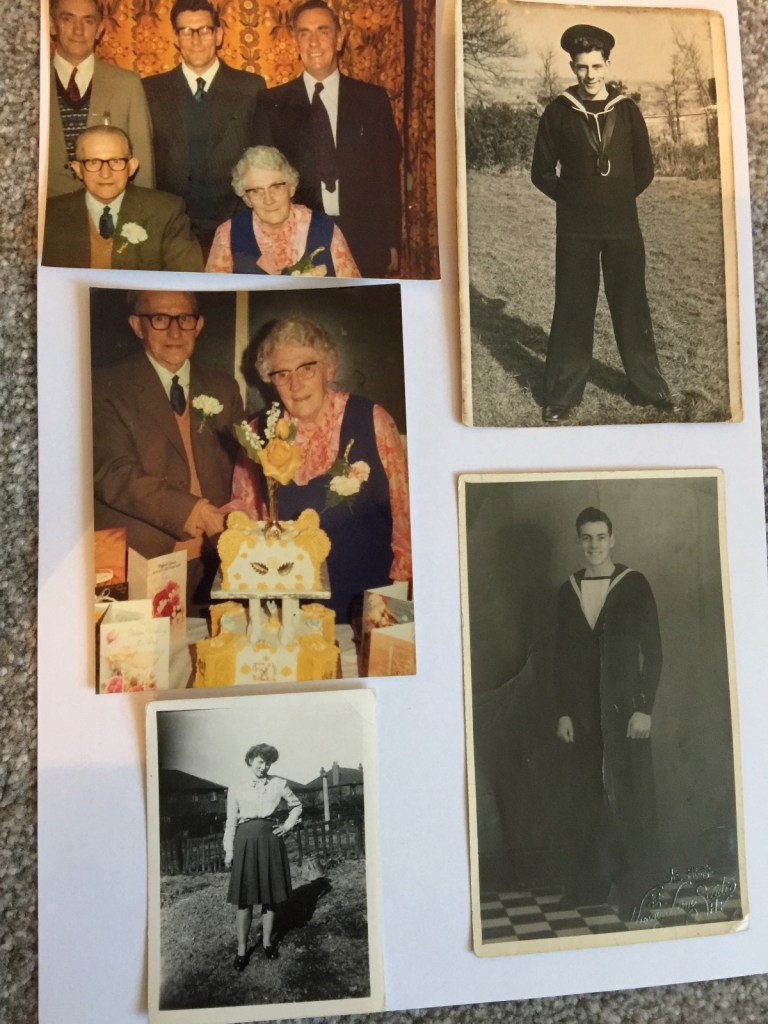
Pictured below : Pictures of Colin Horner in uniform and with his family in later life.
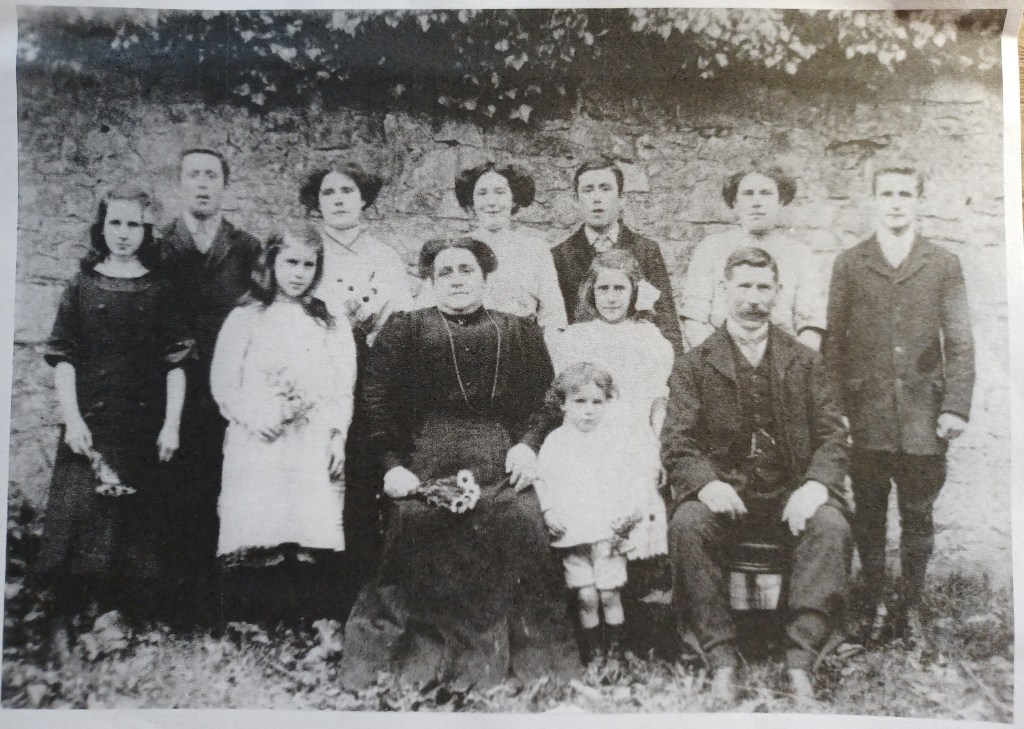
The O’Donoghue family. Charles is at the back, on extreme left. His identical twin is fourth from left.
Name of soldier : Charles O’Donoghue
Your own name : Jim O’Donoghue
The case of Charles O’Donoghue is yet another story from the Great Western Square area of north Dublin, which, with its adjoining streets, has provided so many World War One stories for this site.
In this case, it is from the small adjoining cul de sac called Rosemount Road off the long North Circular Road.
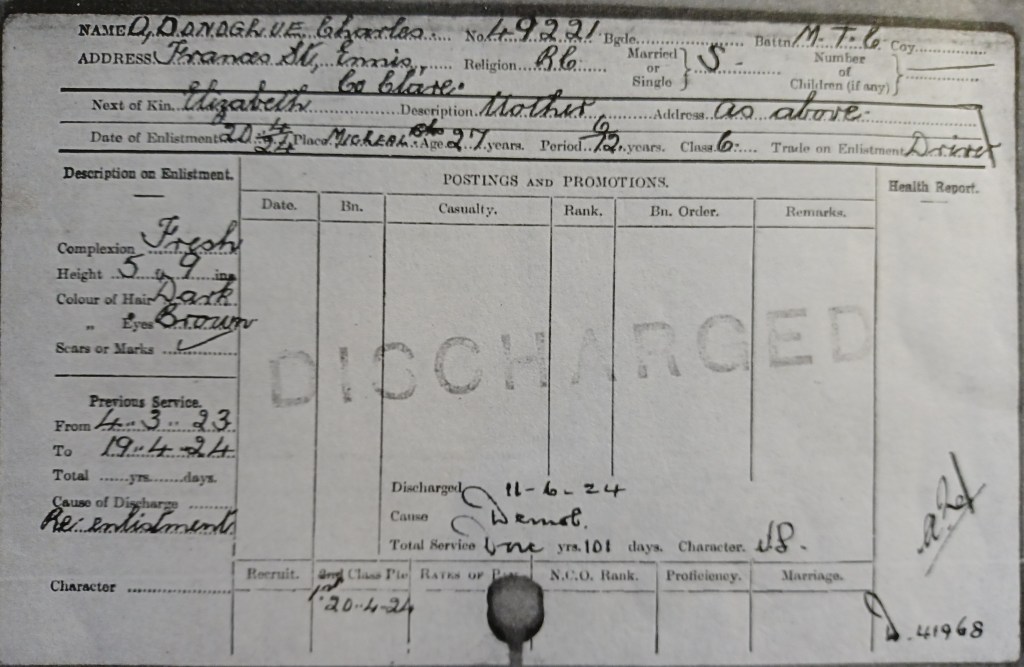
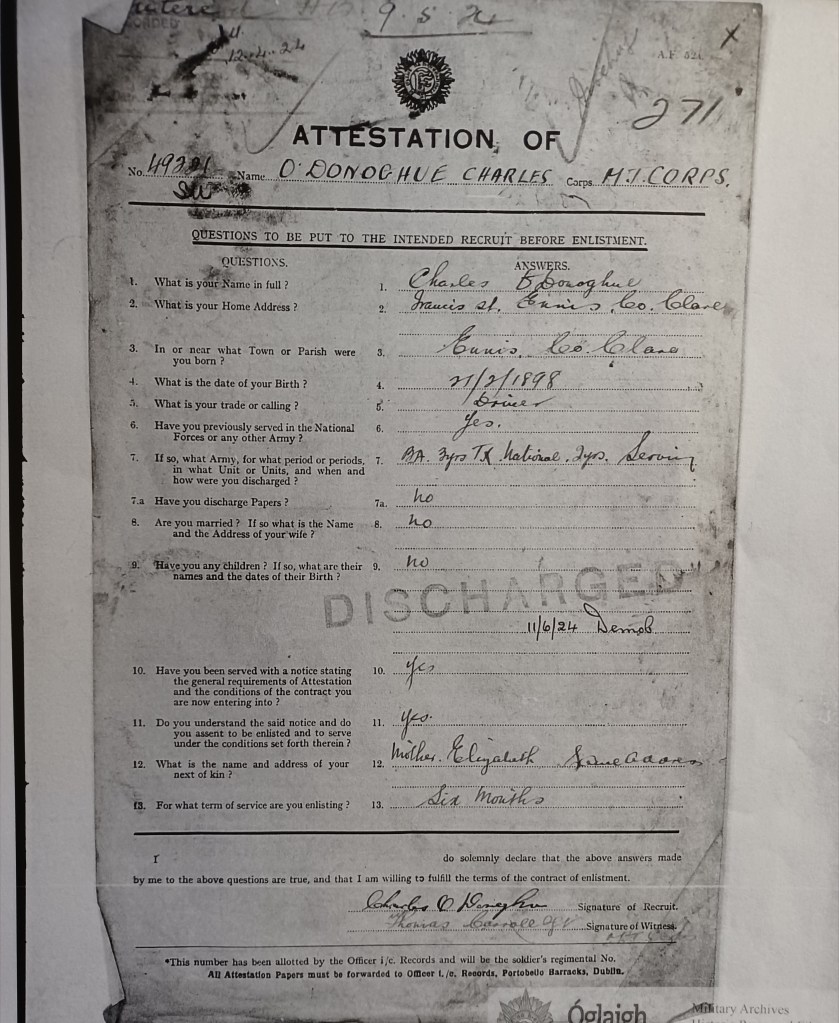
Here lives Jim O’Donoghue, the son of Charles O’Donoghue who fought in the Great War and then joined the army of the new Irish State, being discharged in 1924 (papers reproduced below).
Like many veterans of the First World War, however, Charles O’Donoghue rarely spoke about the experience, nor about his subsequent time in the Irish Army, which in March 1924 was still involved in Ireland’s Civil War.
The Free State army was greatly boosted by the enlistment of former Irish members of the British Army, given their experience and skills. This added to the force’s more conservative, less Republican atmosphere.
It is understood that Charles, who had been a driver, was with the Royal Artillery Regiment and joined the British Army in about 1915, but his area of service in the European war is unknown.
Army Medical history
Charles O’Donoghue was originally from Ennis in County Clare where his father worked in the asylum. He was an identical twin and one of ten children.
In the family picture above, he is in the back row, on the extreme left, while his twin brother is fourth from left, although it is hard to tell them apart !
Your own name : Jim O’Donoghue
Your relative : Father, Charles O’Donoghue
Period of activity : World War One
Specific regiment: Driver, Royal Artillery Regiment
Areas served in: The Western Front
Did you have much contact with him?
Yes, I grew up with him. He passed away when I was 21.
Do you have any mementos of him ?
Just the documents here. There were very few photographs. …………. Alsoon Rosemount Road – the Battle of Jutland and North Dublin
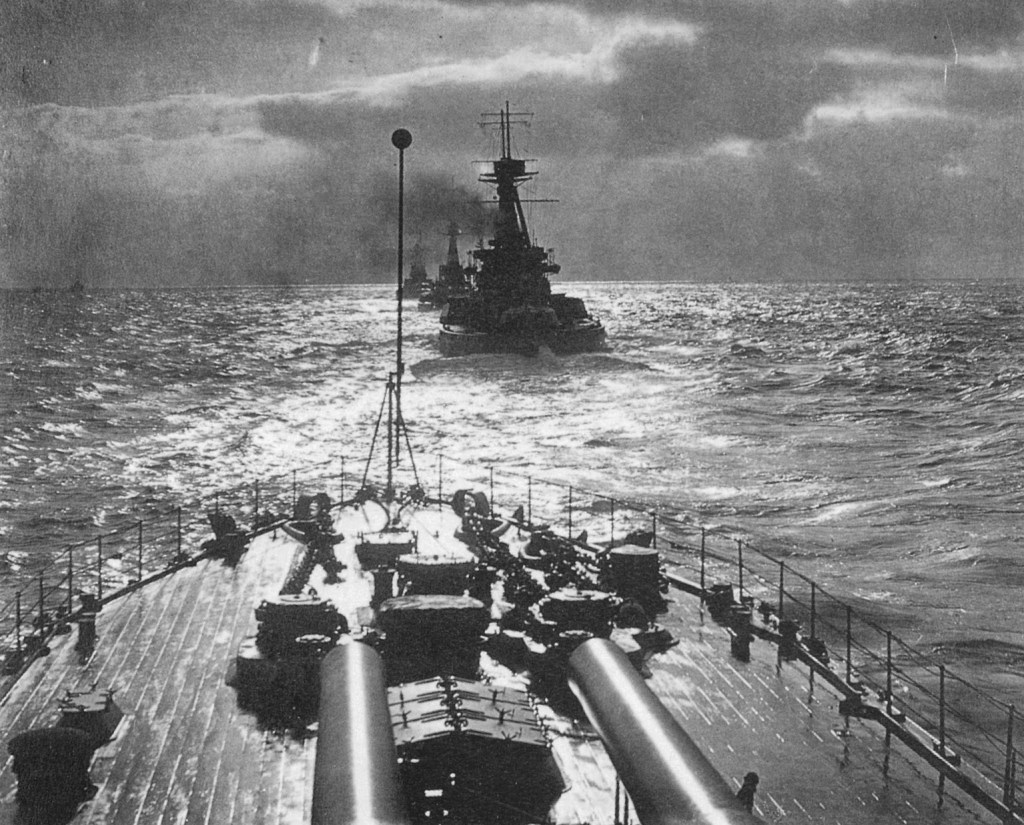
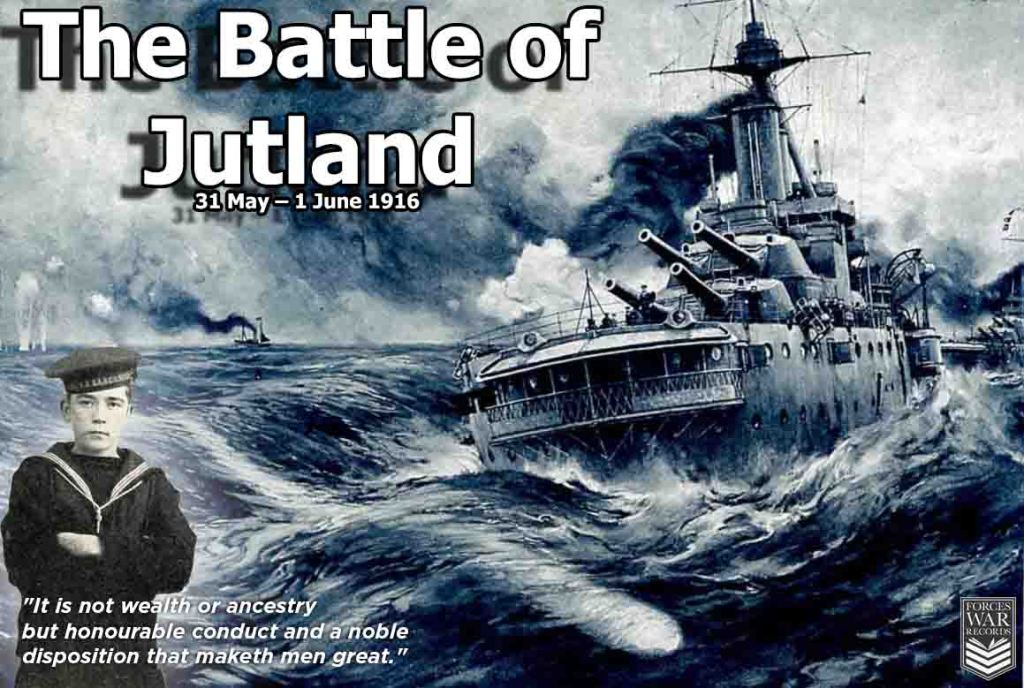
It is worth noting that the small cul de sac of Rosemount Road, has other connections to World War One, including the Battle of Jutland, one of many associations in the area to this great North Sea battle.
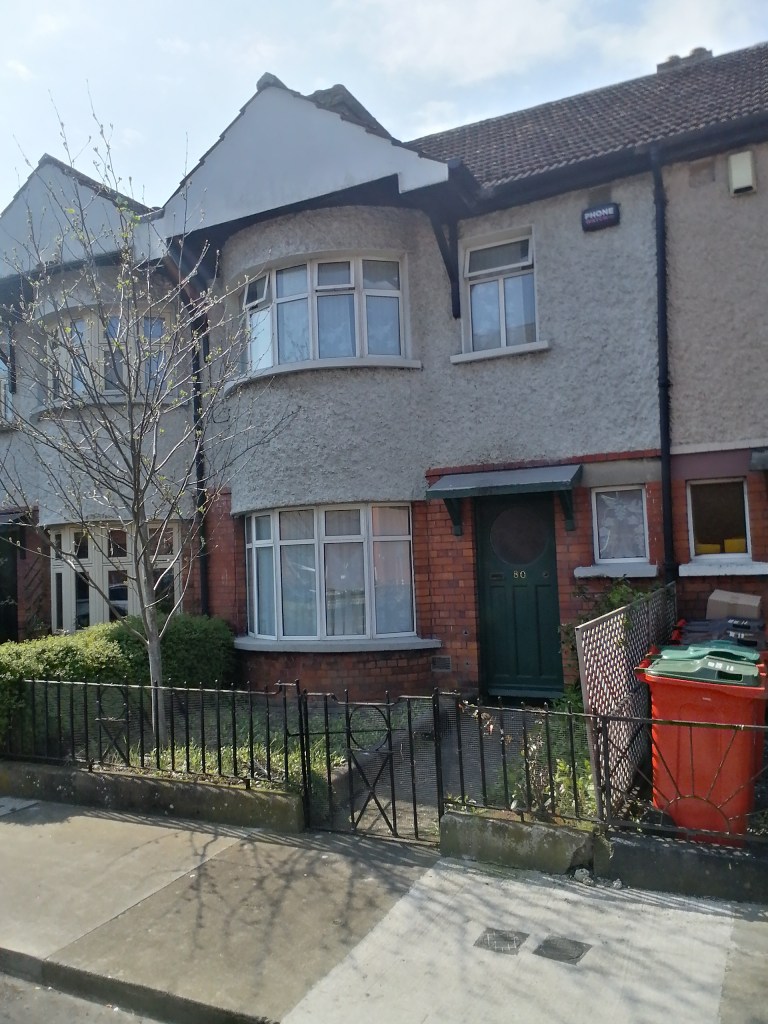
At No.1 Rosemount Road, just a few doors from Jim O’Donoghue, lived Daniel Jeremiah Hogan who died at Jutland, on 1 May 1916 aged 34. Hogan was a Petty Officer Telegraphist on the HMS Defence.
Telegraph operators like Hogan were important people on these ships, given a vessel’s constant need for monitoring and communications, doubly so on a military vessel. And even more so in the Battle of Jutland, which involved a lot of maneuvering and tactics.
In fact, the whole battle was a game of nautical ‘cat and mouse’ , with the numerically smaller German navy drawing the British into an open battle in the hope of inflicting sudden and preemptive damage.
This they did, and a series of devastating German direct hits sunk British ships, with the loss of over 6000 lives. There were about 2500 Germans killed.
There were 350 Irish among the dead – a large number given the size of our country and reflecting the traditional high participation of Irish people in the Royal Navy, especially from the Cork and Kerry areas.
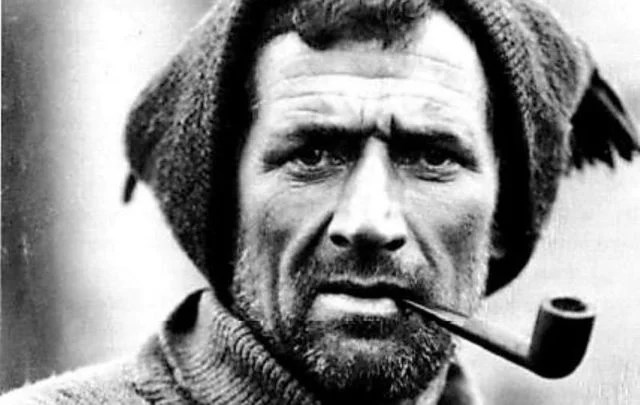
Kerryman Tom Crean, for example (above) joined the Navy and, through it, became an artic explorer.
Daniel Jeremiah Hogan’s body was never found at Jutland and he is remembered on the Portsmouth Naval Memorial. Hogan’s father was also called Daniel Jeremiah and his mother was Margaret.
Also killed at Jutland was Felix Ruddy Kelly, from nearby Cabra Park (House below). He was an Able Seaman and his parents were Francis and Elizabeth.
The Cabra Park home of Felix Ruddy Kelly
Ruddy Kelly was on the HMS Queen Mary. It was the Royal Navy’s most powerful ship and yet it too was sunk. In their haste to load the guns, the crew had left explosive propellant lying around the turrets.
Another casualty on the HMS Queen Mary, was Michael Doherty, who came from not far away on Upper Dominick Street, near Broadstone.
Doherty was a stoker, keeping the ship’s furnaces going. These men were particularly vulnerable in an attack, deep in the ship’s bowels, and trapped by the fire above and by flooding.
Michael Doherty was aged 23 and lived at 79 Upper Dominick Street. Both upper and lower Dominick Street provided many soldiers for World War One. As did Henrietta Street, right nearby.
At No 5 Henrietta Street, lived Gordon Stewart Davidson Veitch who also died at Jutland. He was a Cooks Mate on the HMS Defence and was the same age as Michael Doherty at 23. His parents were Eric Gordon and Lillian.
As with the land battles at the Somme and Ypres, many bodies from Jutland were never found, and the men are remembered on dedicated memorials, such as the Naval Memorial at Portsmouth, the main port for the Royal Navy.
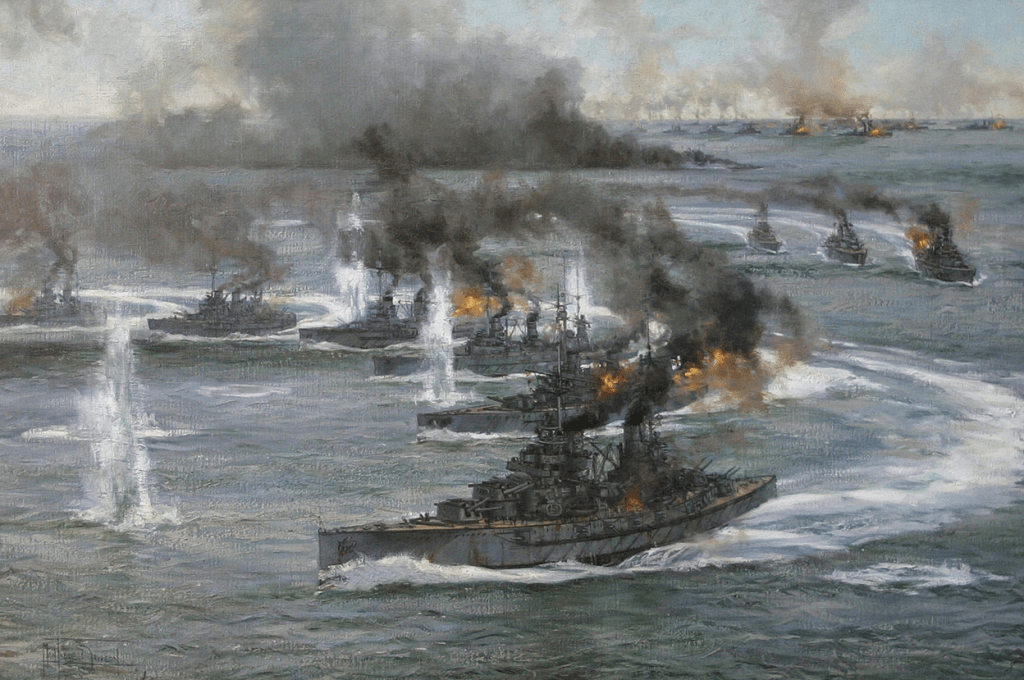
The Battle of Jutland was effectively the only naval battle of the war but it was a crucial one, despite occuring for just half a day. In fact, it was the biggest sea battle in history until that time and remains one of the biggest, involving 250 vessels.
However, it was also the last naval battle fought primarly by battleships, which showed how warfare was changing. In the Second World War and since, such naval encounters are accompanied by war planes and intense aerial battles.
After Jutland, the Germans concentrated on lone attacks on British boats and on commercial shipping, mostly using their famous U boat submarines. This was similiar to World War Two, when the Germans even attacked Irish shipping, even though Ireland was neutral.
Such attacks were effective for the Germans but they antagonised other countries, and brought the United States into World War One.
The Battle of Jutland – artist’s impression
In 1915, the Luisitania was sunk by the Germans off Cobh, then called Queenstown, while in 1918, of course, the RMS Leinster was sunk off Dun Laoghaire, then called Kingstown, causing many casualties.
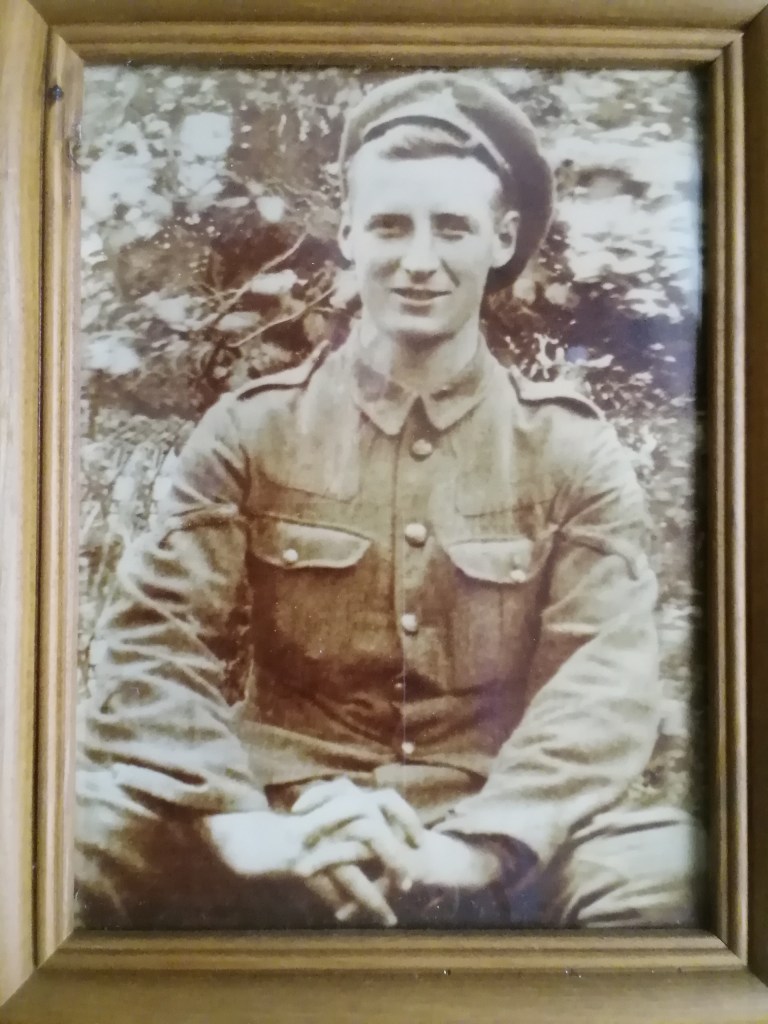
Above : A young William Brazil in his Royal Artillery uniform
Name of soldier : Willie Brazil
Name of descendent : Enda Carr
Teacher Enda Carr lives on Monck Place, Phibsborough, north Dublin. This is just beside Great Western Square where his grand uncle William Brazil, a veteran of the Somme, lived until well into his 90s.
Enda’s story adds to the many associations between this small area and the First World War, with a number of stories already posted here from people living on the Square or on Monck Place.
As it happens, Great Western Square was originally built for railway workers. But it also housed military veterans and, after 1914, there was an overlap, with many rail workers enlisting. Those who returned from war often resumed their rail jobs and were given houses on the square or on the adjoining Great Western Villas.
The old railway terminus at nearby Broadstone has a plaque listing the fallen workers – and soldiers.
There were also fatalities who lived on the Square itself such as Private John Brennan who lived at No 43. Aged just 19, he was with the Machine Gun Corps, Infantry division and died in France on 9 April 1917. He is remembered on the Arras Memorial.
Around the corner, at No 20 Phibsborough Road, lived Thomas Harding, who died at the Somme, with the Munster Fusiliers. This was at the Battle of Ginchy on 9 September.
The Battle of the Somme was a massive offensive, which took place between 1 July and 18 November 1916 on both sides of the Somme river in France.
The battle was supposed to break the stalemate on the Western Front and hasten a victory for the Allies.
However, the operation was delayed by some months as the French dealt with the German assault on Verdun. Within this time, the Germans got dug in at the Somme and were well prepared for the Allied offensive, despite its considerable preparation.
On the first day alone, the 1st July, there were 57,470 casualties in the Somme offensive, including 19,240 killed. Included among them, were Broadstone natives John Geraghty of Prebend Street, (Royal Dublin Fusiliers) and James Joseph Gannon, of Royal Canal Bank (Royal Irish Regiment).
The Somme offensive would continue for another four months. In all, more than three million men fought in the battle and one million men were wounded or killed, making it one of the deadliest battles in human history.
William Brazil was lucky enough to survive it. However, his brother in law Thomas Connors, from Gorey, did not and in a poignant encounter, the paths of the two men crossed in the war zone. While Willie Brazil was on his way back from the front line, Thomas was on his way towards it.
‘Take these’, said his brother in law and he offered Willie his personal posessions, ‘I dont think I’m going to survive this.’
Such premonitions were common among soldiers at the front line, where death was common and relentless, and especially so at the Somme. Thomas Connors did not survive. Nor did Thomas’s brother Michael, who died later in the war at Gallipoli.
Your own name: Enda Carr
Your relative: Granduncle Willie Brazil
Period of activity: 1914-1920 including World War One
Specific regiment: Royal Artillery
Areas served in: The Western Front, The Somme
Did your family have much contact with Willie?
Yes, we visited him sometimes in Great Western Square and would meet him out walking in Phibsboro. He was a fit man and lived into his nineties. He was from Phibsborough Road originally.
Where is he buried? Glasnevin Cemetery
Do you have any mementos of him?
No, just the photograph shown here. Nor do we have personal possessions of his brother-in-law Thomas Connors.
The fighting at the Somme was so intense and in such terrible conditions that the bodies of many of those killed were never recovered.
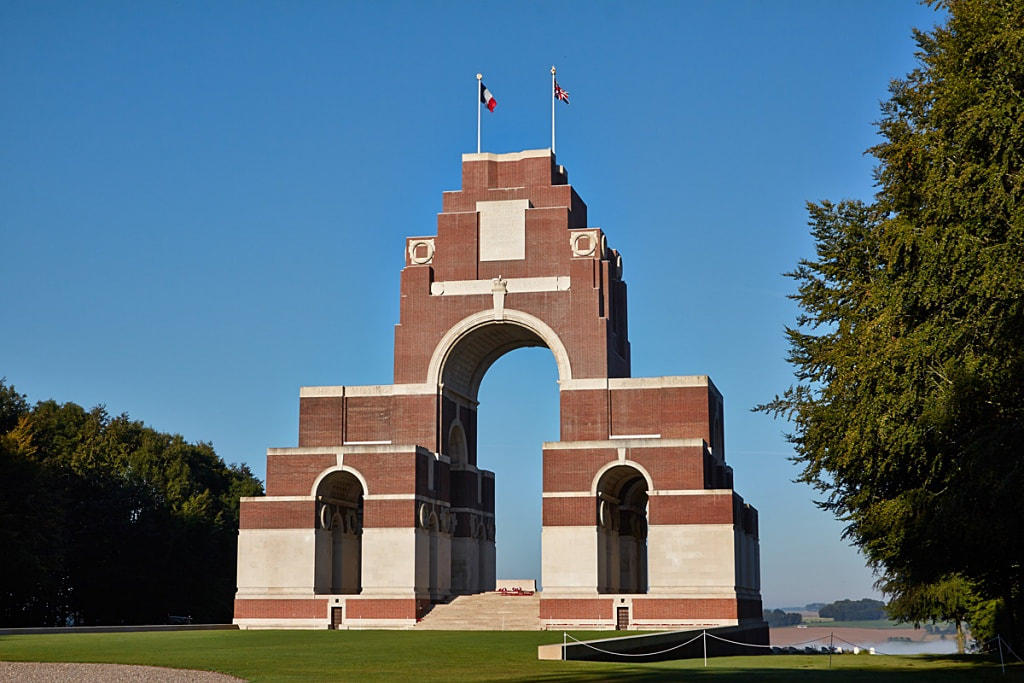
They are remembered today on the Thiepval memorial, erected nearby. This is a huge memorial, composed of 16 redbrick arches and faced with Portland stone. The names of the missing are inscribed upon it.
The memorial was designed by Sir Edwin Lutyens, the same architect who designed the Memorial Park at Islandbridge, Dublin. (And the Barings Castle house on Lambay Island).
A staggering 72,000 soldiers went missing in the Somme area, from 1915 to 1918. Even today, human remains are still being found.
Once a body is discovered and identified, a burial is arranged and the name on the Thiepval Memorial is filled in with the cement.














 The Lion and the Shamrock